Blues / Chicago electric blues · 1970
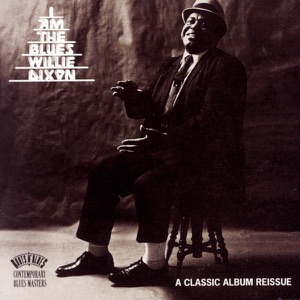
I Am the Blues
Willie Dixon
Why listen
Willie Dixon revisits a familiar songbook in his own voice, giving the words and the band room to establish their particular weight.
Listen and read
Tracks · previews
English editorial edition
Album story
The opening “Back Door Man” takes more than six minutes to make its case. Dixon places a phrase, the band occupies the space after it, and the repeating rhythm prepares another entrance. The interest is not simply that a famous songwriter is singing his own material. It is how much the pacing changes the way familiar words and musical figures register.
I Am the Blues presents Dixon performances of repertoire associated with other singers, rather than collecting those singers’ earlier recordings. Reissue label Music On Vinyl identifies the original album as a 1970 release. The linked Sony digital edition also carries a 1969 phonogram notice; those pieces of metadata should not be treated as interchangeable release dates. The musical distinction is clearer: this is a newly performed programme, not an archive of the songs’ first appearances.
Leave room after the sentence
Dixon’s low voice gives the songs a centre without constantly reaching for an extreme register. Listen to the length of a phrase and the instrumental response that follows. A continuing pulse can make an apparently empty gap feel active. The longer performances offer room for that exchange, rather than functioning merely as familiar songs with additional solos attached.
A sequence of familiar names
“Back Door Man” and “I Can’t Quit You Baby” occupy substantial space at the beginning, before “The Seventh Son” and “Spoonful” alter the album’s stride. Later come “You Shook Me,” “I’m Your Hoochie Coochie Man” and “Little Red Rooster.” Recognition can be a distraction if it makes you wait for another singer’s phrasing. Follow Dixon’s endings and the band’s replies before making those comparisons.
An interpretation, not an answer key
By the closing “The Same Thing,” one voice has linked the nine performances into a portrait of a repertoire. A songwriter’s rendition need not be treated as the only correct account of a song. Hear this programme first on its own terms, then choose one familiar title and compare the space between phrases in another recording. The differences can reveal how a composition changes when it acquires another voice and another sense of time.
The album through its tracks
Follow the gap after a vocal phrase, then the instrumental response that leads into the next one.
Back Door Man
The extended opening allows both singer and band to establish their presence without rushing from one statement to the next. Follow the pulse first, then concentrate on where Dixon lets a vocal phrase end. The accompaniment keeps moving during the pause, giving the next entrance its weight. If another singer’s version is already familiar, suspend that expectation long enough to hear how this lower voice sits against the rhythm. A performance by the writer is not automatically the earliest recorded version. The selected Sony track is the studio performance opening this album, approximately six minutes and thirteen seconds long, rather than an earlier single or a later concert rendition.
Reference · Apple Music: Sony nine-track digital editionSpoonful
A compact musical figure can carry changing pressure without needing constant alteration. Dixon’s phrasing offers one way to hear that: a word held slightly longer, or a delayed next entrance, changes how the repetition feels. Listen to the voice once, then follow the accompaniment through the same passage. The two can seem to move at different speeds while remaining together. Here the song occupies the fourth position, following “The Seventh Son,” in a studio performance of about five minutes. Keep that setting in mind when comparing it with more extended readings by other bands. The useful question is how each version spends its time, rather than which performer supplies the definitive answer.
Reference · Music On Vinyl: I Am The Blues,1970 andnine-track programme
Listen next
Alongside Koko Taylor on her self-titled album, compare the different weight and phrasing that a Dixon song can acquire in another voice.
Koko Taylor ↗References & editorial note
Written for English readers. Album facts are referenced below; listening suggestions are editorial interpretations. AI-assisted editorial review; not independently human-reviewed.