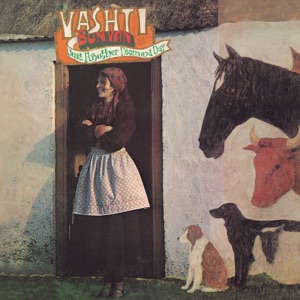
Folk / Country / Singer-songwriter folk · 1970
Just Another Diamond Day
Vashti Bunyan
Why listen
Short songs and carefully placed sounds keep a journey moving at the scale of a nearby voice.
Listen and read
Tracks · previews
English editorial edition
Album story
The end of a short song can be as revealing as its opening. On Just Another Diamond Day, a small melodic shape gives way to another before it has been inflated into a grand statement. Vashti Bunyan’s nearby voice holds these scenes together, inviting you to notice what a few accompanying sounds leave in the air.
Joe Boyd produced the album, released in 1970. In a later interview Bunyan remembered writing the songs to document her journey and keep travelling. That context matters, but the recordings were made in London: this is not an accidental field document of rural life. Quietness is a musical presentation shaped by songs, arrangements and players, as well as by the singer’s distinctive delivery.
A landscape is not a guarantee
Ponds, weather, sunlight and rivers suggest a pastoral world, but their presence need not prove a life without difficulty. A song may record experience or offer a shape that helps someone live through it. Even with the journey in mind, avoid assigning every line to a specific incident. Attend instead to how a quiet voice maintains a scene without insisting upon it.
Follow the small changes
Diamond Day introduces a compact pace, followed by Glow Worms and Lily Pond. There is no need to wait for a large chorus or an extended climax. Notice what remains when each piece ends, and how the next begins with room of its own. Repetition and small melodic changes can carry movement without turning every song into a dramatic ascent.
Restore the original ending
The original fourteen-song sequence finishes with Iris’s Song for Us. The linked reissue adds four tracks afterwards; hear them as supplementary material rather than an extension of the 1970 ending. Pause after track fourteen before continuing. The album does not require its later rediscovery story to justify the listening experience. Within the original sequence, its brief scenes already offer a way to notice how much a melody, a pause and a carefully placed accompanying sound can do at a small scale.
The album through its tracks
Hear the first three tracks together, then pause at track 14 to preserve the original album ending.
Diamond Day
Listen beside the voice as well as directly to it. Small accompanying gestures can change the feeling of a returning phrase without making the song noticeably larger. The track is called Diamond Day, shorter than the album’s title, and its position at the beginning proposes an intimate listening distance. Follow the vocal melody once, then wait for the sounds left between its phrases. There is no need to treat the absence of a large climax as permission to ignore the detail. The short duration makes the opening and ending easy to hold in mind together. Continue into Glow Worms and notice how lightly one scene gives up its place to the next.
Reference · AppleMusic:18trackDiCristina reissueRose Hip November
Let the seasonal title suggest a setting, then attend to the time left after a vocal phrase. The wait for another note can carry feeling even when the delivery remains restrained. As the eighth song in the original programme, this track offers another compact scene rather than a documentary key to a particular event on Bunyan’s journey. Follow the endings of the vocal lines first, then the sounds that keep the underlying pace alive. Verbal imagery and musical duration need not perform the same task. Alternating between them reveals more than treating the song as a single wash of gentleness. Small differences in note length and silence provide enough to follow.
Reference · AppleMusic:18trackDiCristina reissue
Listen next
Compare the arrangements around another quiet, distinctive voice on Nick Drake’s Five Leaves Left, folk-17.
Five Leaves Left ↗References & editorial note
Written for English readers. Album facts are referenced below; listening suggestions are editorial interpretations. AI-assisted editorial review; not independently human-reviewed.
- VashtiBunyan interview withMarcusWilson2008:journey andsongwriting · www.artcornwall.org
- FatCat official artist biography:JoeBoyd production andLondon recording · www.fatcat.online
- MainlyNorfolk:original14tracks and2000reissue credits · www.mainlynorfolk.info
- AppleMusic:18trackDiCristina reissue · music.apple.com