Folk / Country / Country essentials · 1968
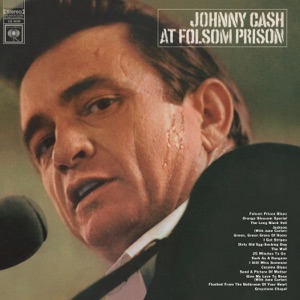
At Folsom Prison
Johnny Cash
Why listen
Stay for the seconds after a song. A steady band, Cash’s low voice and the audience’s reactions make the room part of the listening experience.
Listen and read
Tracks · previews
English editorial edition
Album story
Do not stop Folsom Prison Blues as soon as the singing finishes. The guitar’s clipped movement and Cash’s low voice are only part of the encounter: responses from the room change the space around a familiar song. At Folsom Prison offers more than the novelty of a concert inside a prison. Begin by following three positions in turn—the singer, the band and the people receiving the performance. Their relationship can be heard before every lyric is understood.
Two shows were recorded at California’s Folsom State Prison on 13 January 1968. The original album, released later that year, selected a sixteen-song programme from those performances. That is the configuration linked here. The 2008 Legacy Edition opens out both shows and is a different listening sequence. A live record can be shaped from an event rather than preserve one complete concert without intervention.
Leave room for humour
Place Cocaine Blues and 25 Minutes to Go beside Dirty Old Egg-Suckin’ Dog and Flushed from the Bathroom of Your Heart. Stories of punishment and death share the programme with short comic numbers. The contrast matters: the audience is not addressed only as an object of pity. Notice how the same vocal weight supports another tone. Laughter need not cancel the seriousness of what came before it.
A room heard through a record
Audience sound is important, but not every reaction should be treated as untouched evidence. Cary O’Dell’s Library of Congress essay notes post-production work on some crowd responses. That does not make the entire exchange fictitious. Keep the performance and its presentation distinct, and hear what a reaction does to timing without claiming to know every listener’s thoughts.
Someone inside contributes the ending
Greystone Chapel was written by Glen Sherley, then imprisoned at Folsom. The famous visitor ends with a song from someone inside. Try it after Green, Green Grass of Home and compare the kinds of consolation they suggest. Cash need not become a spokesman for everyone present: hearing one person’s work passed to others is specific enough to matter.
The album through its tracks
Keep the audience sound after the opener, then hear the final two tracks together. Previews offer only short portions of the performance.
Folsom Prison Blues
Start with the clipped guitar sound and the voice moving against the same dependable pulse. Cash had released the song in 1955; returning it to the place in its title gives this performance a particular setting. The narrator is still not a reliable biography of the singer. Listen first to the delivery, then to the gap between singing and audience response. Applause cannot tell you that everyone in the room meant the same thing. Keep Dark As the Dungeon, the following selection, in your sequence and notice how quickly the concert changes its storytelling atmosphere. A recognised opening can become a reason to stay for what comes next, rather than the whole visit.
Reference · Apple Music / Sony: At Folsom Prison, original sixteen-track programmeGreystone Chapel
Knowing the writer changes the frame of the closing song. Glen Sherley was imprisoned at Folsom when Cash brought his composition into the performance. Avoid turning that fact into a statement about every prisoner’s beliefs. One person’s work meeting another singer and an audience is already a substantial encounter. Follow the accompaniment through the ends of Cash’s phrases, then compare the song with Green, Green Grass of Home immediately before it. Home and a chapel can suggest different forms of consolation without requiring you to share a particular faith. As the album closes, notice whether the voice or the room remains in your memory. The ending can leave a question rather than deliver one compulsory feeling.
Reference · Library of Congress: Cary O’Dell, Glen Sherley and editorial construction of the live record
Listen next
Continue with B.B. King’s Live at the Regal and hear another performer making the audience’s response part of the time between songs.
Live at the Regal ↗References & editorial note
Written for English readers. Album facts are referenced below; listening suggestions are editorial interpretations. AI-assisted editorial review; not independently human-reviewed.
- Johnny Cash / Columbia Legacy: two 1968 shows and original sixteen-track album, 2008 archive release · www.johnnycash.com
- Apple Music / Sony: At Folsom Prison, original sixteen-track programme · music.apple.com
- Library of Congress: Cary O’Dell, Glen Sherley and editorial construction of the live record · www.loc.gov