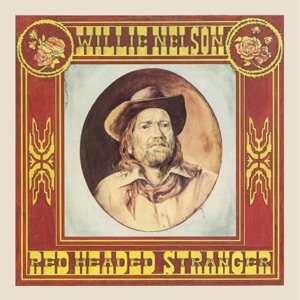
Folk / Country / Country essentials · 1975
Red Headed Stranger
Willie Nelson
Why listen
Brief returns and inherited songs change one another’s meaning within a Western narrative.
Listen and read
Tracks · previews
English editorial edition
Album story
The fifteen tracks of Red Headed Stranger are not fifteen songs of equal size. A narrative opening, brief theme returns, inherited country songs and instrumental pieces alternate. Willie Nelson uses those different units to make the time of a wandering character. Blue Eyes Crying in the Rain can be a complete experience as a familiar single, yet its place between other scenes gives it another job.
The Sony fifteen-track edition follows the original 1975 programme listed on Nelson’s official site, excluding expanded bonuses and later live performances. A murderous preacher is the central character; his actions are not the singer’s confession or an instruction to approve them. The title song is by Carl Stutz and Edith Lindeman, while Blue Eyes Crying in the Rain is Fred Rose’s. Nelson’s creative work includes placement as well as new composition.
The first seven tracks keep returning
Time of the Preacher leads to I Couldn’t Believe It Was True, then a brief theme return at track three. A medley, Blue Eyes Crying in the Rain and the title song follow before another short return at seven. Skipping these fragments removes part of the opening construction. Remember the first song as you pass through the intervening material, then notice whether the returning theme seems to carry the same information.
A landscape without a spoken explanation
The documented players include Bobbie Nelson on piano, Mickey Raphael on harmonica and Willie on voice and guitar. Joe Nick Patoski’s Library of Congress essay describes the aim of keeping contributions light and simple. O’er the Waves and Down Yonder bring instrumental repertoire into a sequence previously driven by narrative songs. Instead of waiting for another account of an event, follow the movement of keys and strings. Another kind of time becomes possible between the episodes.
The ending is made from different pieces
Later, Hank Cochran’s Can I Sleep in Your Arms and Bill Callery’s Hands on the Wheel participate in the story through their new positions. Bandera closes the record instrumentally rather than restaging the title song as a grand finale. The lasting interest is this construction, not an automatic equation between few instruments and truth. Hear the whole sequence, then revisit a favourite song with its immediate neighbours. Placement becomes audible as a creative decision.
The album through its tracks
Remember what lies between the opening theme and its returns at tracks three and seven.
Time of the Preacher
This is the full opening song, not either short theme return at tracks three and seven. Remember its melodic outline and narrative starting point, then hear how the intervening songs alter your encounter with the returning material. The character’s actions should remain distinct from Nelson’s own biography or moral approval. A song can narrate an event without endorsing its protagonist. Rather than waiting only for a dramatic change in arrangement, consider what the shortened returns ask you to remember. Hearing the opener alone and hearing the first seven tracks are different experiences. The fragments are part of the album’s construction, not disposable extras between more important songs.
Reference · Willie Nelson official: original fifteen-track programme and creditsBlue Eyes Crying In the Rain
Fred Rose’s song occupies the fifth position, between the medley and the title track. The official site preserves that writing credit, so this is not a story made exclusively from Nelson originals. The selected recording belongs to the original album rather than a later concert or remake. First hear the familiar melody on its own terms; then include the transitions from the preceding medley and into the following song. A self-contained hit can also function as recollection within a larger narrative. Nelson’s voice and the concise accompaniment connect the borrowed song to its neighbours without erasing its separate authorship. Reinterpretation and sequencing work together here.
Reference · Willie Nelson official: original fifteen-track programme and credits
Listen next
Compare the Byrds’ Sweetheart of the Rodeo for another way an inherited repertoire acquires a new album sequence.
Sweetheart of the Rodeo ↗References & editorial note
Written for English readers. Album facts are referenced below; listening suggestions are editorial interpretations. AI-assisted editorial review; not independently human-reviewed.