Hip-hop / Golden-age New York · 1987
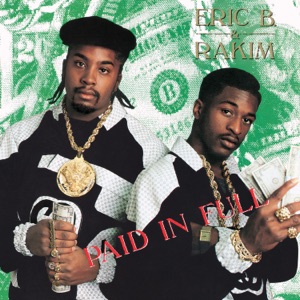
Paid in Full
Eric B. & Rakim
Why listen
A steady beat makes small changes in the placement of words feel enormous.
Listen and read
Tracks · previews
English editorial edition
Album story
Rakim does not need to shout to command “I Ain’t No Joke”. The force comes from words finding their places, with matching sounds appearing inside a phrase as well as at its end. Listen for where a sentence moves against the drum pattern. Speed alone is not the point; the arrangement gives precision room to register.
The duo’s 1987 debut also asks you to hear the DJ as a foreground performer. A passage of rapping can give way to a track organised around turntable gestures. Repetition supplies a stable surface, so a cut, an accent or a change in vocal spacing becomes an event. Following those exchanges is more useful than treating the album as a collection of famous lyrics with some instrumental breaks attached.
Find a rhyme before the line ends
Internal rhyme simply means that related sounds can connect within a phrase rather than waiting for its final word. You do not have to decode every reference to hear that movement. Tap a steady pulse and notice how the voice distributes its stresses around it. A sentence can feel extended even when the beat remains squarely in place. Calm delivery gives those small decisions unusual weight.
Leave space for the other name
“Eric B. Is On the Cut” arrives second, an early reminder of the partnership named on the sleeve. Later, “Chinese Arithmetic” brings the turntables forward again. Compare their interruptions and repetitions with the longer verbal stretches of “My Melody”. These are different ways of making recorded sound move, not a hierarchy in which speech automatically outranks everything else. “Extended Beat” closes the original ten-track sequence.
Separate the dates and versions
The British album chart first registered the record in 1987; its number eighty-five peak came in March 1988. Present-day praise from Universal’s uDiscover store belongs to its subsequent reputation. The linked expanded edition carries a 2005 copyright and adds two mixes after the original programme. Its final Coldcut “Mini Madness” remix is separate from the title track at number six. Hear the album arrangement first before comparing how a remix redistributes attention.
The album through its tracks
Keep a steady pulse while following the vocal, then let the turntables take the foreground on track two.
I Ain't No Joke
Choose one sentence and follow its accents rather than waiting only for the rhyme at the end. Rakim makes his authority felt through placement: some syllables land firmly, while others help the phrase travel onward. The retrospective uDiscover description emphasises his controlled delivery and rhythmic precision; this opening track offers a practical way to test that description. On a second pass, concentrate on the regular drum pattern while allowing the voice to make a different shape over it. There is no requirement to transcribe the words to hear the distinction. When the following DJ track begins, ask which sounds now occupy the foreground that the rapper has just established.
Reference · uDiscover Music official store: retrospective assessmentPaid In Full
The recurring bass figure and measured beat give the brief rap plenty of surrounding space. Follow what happens to your attention after the vocal stops: does the repetition still sound like background, or does it now seem to carry the thought onward? That is a listening possibility rather than a definitive interpretation of the words. Select track six for this comparison. The linked expanded edition ends with Coldcut’s separate “Mini Madness” remix, which should not be mistaken for the album arrangement. Knowing both can be rewarding, but familiarity with the remix can also obscure how much the original achieves by leaving room. Begin with its proportions before seeking additional layers.
Reference · Apple Music: Expanded edition programme and retrospective
Listen next
Continue with Public Enemy’s It Takes a Nation of Millions to Hold Us Back and compare the density of sound surrounding the rapper.
It Takes a Nation of Millions to Hold Us Back ↗References & editorial note
Written for English readers. Album facts are referenced below; listening suggestions are editorial interpretations. AI-assisted editorial review; not independently human-reviewed.
- Apple Music: Expanded edition programme and retrospective · music.apple.com
- Official Charts: album run in 1987 and 1988 · www.officialcharts.com
- uDiscover Music official store: retrospective assessment · shop.udiscovermusic.com
- AllMusic: original ten-track programme and Steve Huey retrospective · www.allmusic.com