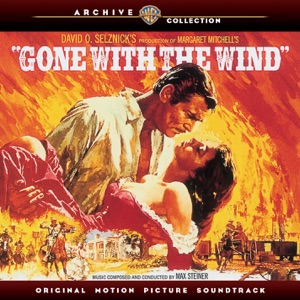
Film music / Golden-age Hollywood · 1939
Gone with the Wind
Max Steiner
Gone with the Wind · 맥스 스타이너
Why listen
A broad melody can make a place feel remembered. Listen for the spaces after the grand gestures, not only their size.
Listen and read
Tracks · previews
English editorial edition
Album story
Hear the opening Main Title and continue straight into Tara. Instead of identifying a famous tune, notice how the second track changes the distance from which you hear the first. Max Steiner’s score offers an approachable lesson in musical memory: a phrase can feel familiar before you have decided what it means. Knowledge of the film is helpful, but following the rise and retreat of the sound is enough to begin.
The film dates from 1939. The programme linked here is the twenty-two-track original soundtrack presented by WaterTower, rather than a later concert performance of selections. Its dates need separating: Apple displays a 1940 date and a 1997 compilation copyright, while WaterTower’s release page gives 2013. None should be treated as a universal date for every performance and edition. The track sequence provides the practical point of reference.
Reading without the pictures
Titles such as The O’Hara Family and Scarlett Prepares for the Barbecue identify people and situations. They need not become a test of plot knowledge. Follow a sustained melodic line, then notice when the music turns more abruptly. Those changes offer an experience of dramatic movement even without reconstructing a scene. Listening alone and hearing music within a film are related activities, but they are not identical.
A programme assembled in sections
Several titles join more than one event, and one selection carries an Extended Version label. A track boundary therefore should not automatically be treated as a scene boundary. If the full programme feels long, stop after the twelfth selection and return later. That simple division gives you room to remember changes of pace rather than letting the familiar opening stand for everything.
Recognition at different distances
The score was nominated at the 1940 Academy Awards; it did not win that category. Its second place in AFI’s 2005 film-score list belongs to a much later assessment. Neither distinction tells you what to feel. Try returning to the opening after the finale and asking whether the melody now sounds like something remembered, rather than merely something announced.
The album through its tracks
Continue from Main Title into Tara, then revisit the opening after Flashback / Finale.
Main Title (Gone With the Wind)
At the first large gesture, postpone the word grand and listen for what makes you wait for the next phrase. Loudness and melodic breadth are different qualities. A short accent can clear the way for a longer line, changing your sense of how much time is available. The track opens both the label’s programme and the linked digital edition, making Tara a useful immediate comparison. Hear the title once as a complete piece and once as an entrance into what follows. A preview can introduce the orchestral texture, but the full track is needed to follow its overall release of tension. You need not assign every change to an image from the film.
Reference · WaterTower Music: Gone With the Wind original soundtrack, 22-track programmeTara
Keep the opening’s impact in mind, then attend to where this melody seems to breathe. When the sound retreats, does the movement stop or make the next phrase more welcome? The title connects the music with a place in the film, but a listener without that context can still follow the feeling of sustained attention. Avoid deciding in advance that one emotion is required. Compare the sense of distance in the first two tracks, then return here after Flashback / Finale. A passage that initially sounded simply attractive may now feel remembered. The exercise concerns your changing attention, rather than a requirement to recreate the story or admire a familiar tune.
Reference · Apple Music: Gone With the Wind, 22-track digital edition
Listen next
Continue with Bernard Herrmann’s Vertigo to compare how recurring musical figures can create a different kind of waiting.
Vertigo ↗References & editorial note
Written for English readers. Album facts are referenced below; listening suggestions are editorial interpretations. AI-assisted editorial review; not independently human-reviewed.
- WaterTower Music: Gone With the Wind original soundtrack, 22-track programme · www.watertower-music.com
- Apple Music: Gone With the Wind, 22-track digital edition · music.apple.com
- Academy: 1940 awards, Original Score nomination · www.oscars.org
- American Film Institute: 100 Years of Film Scores, 2005 · prdaficalmjediwestussa.blob.core.windows.net