Film music / Synthesizers & electronic scores · 1982
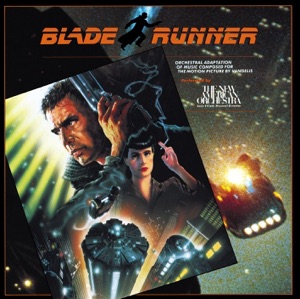
Blade Runner
Vangelis
Blade Runner · 반젤리스
Why listen
A close, breathing melody enters a wide electronic space. Listen for distance and warmth before treating the record as an illustration of a futuristic city.
Listen and read
Tracks · previews
English editorial edition
Album story
Start with Love Theme from Blade Runner. A saxophone phrase can feel close against a much wider background, challenging the assumption that electronic music must sound cold. Then try Blade Runner (End Titles), where forward motion becomes more insistent. Comparing a place to linger with a passage that seems to move gives you an entrance without knowing the film. Follow changes of distance before trying to attach every sound to an image.
The catalogue’s 1982 date belongs to the film. The twelve-track Vangelis album used here was released in 1994. The French national library documents that release and notes that not every selection comes from music used in the film. This is therefore not a complete chronological record of the score. Distinguish it from orchestral adaptations by other performers, too. Listening to an album programme and checking your memory of a film are related but different activities.
Near sounds, distant spaces
Instead of identifying every instrument, ask which sound feels close enough to touch and which seems to spread behind it. A lingering background can hold attention when a melody rests. On a second pass, follow that surrounding space rather than the most prominent line. Slow music can still give the ear plenty to do. Begin at a comfortable volume: atmosphere need not depend on making everything large.
No scene-by-scene instructions required
Explaining every cue through the plot would close off possibilities and reveal events before a newcomer has chosen to see the film. Follow the contrasts within the record instead. Voices, instrumental passages and changes of momentum invite different kinds of attention. Missing a spoken word does not invalidate the experience. Notice where your attention settles, without needing an approved image for it.
Stay beyond a familiar atmosphere
Rain and neon may come to mind, but they need not finish the description. Follow how the density changes across a whole piece and what remains after a long phrase ends. A preview can identify a promising entrance, while the full selection lets its waiting time work. Finding a passage you want to revisit is a more immediate task than deciding whether the album deserves its reputation.
The album through its tracks
Compare the sustained breath of Love Theme from Blade Runner with the momentum of Blade Runner (End Titles). The linked twelve-track programme is not the complete film score.
Love Theme from Blade Runner
While the saxophone completes a phrase, notice what the electronic background continues to hold. The two can suggest different distances rather than compete for the same place. The French national library credits Dick Morrissey with the saxophone on this selection, a useful reminder that an electronic album need not consist exclusively of keyboard sounds. No explanation of the film’s relationship is required to follow the contrast between an intimate line and a broad setting. Listen once to the melody, then return to the sound remaining after it rests. Does a small pause alter the expression? A romantic label tells you less than attending to the time between statements and the anticipation it creates.
Reference · Bibliothèque nationale de France: Blade Runner, 1994 release and performer creditsBlade Runner (End Titles)
After the slower selections, follow the repeated movement carrying this piece forward. Does the melody above it seem to travel at the same speed? On the linked twelve-track album, this is track eleven, with Tears In Rain still to follow. Its title therefore does not identify the final track of the album programme. Compare hearing it alone with hearing the closing pair together: what kind of after-effect follows the momentum? You need not be told the film’s ending to try that experiment. Follow the beat on one pass, then the more distant sounds on another. Urgency can depend on space and placement as well as speed, especially when the surrounding pieces encourage a different pace.
Reference · Apple Music / Warner: Blade Runner, twelve-track 1994 album
Listen next
Continue with John Carpenter’s Halloween and compare expansive electronic space with the tension held inside a short repeated pattern.
Halloween ↗References & editorial note
Written for English readers. Album facts are referenced below; listening suggestions are editorial interpretations. AI-assisted editorial review; not independently human-reviewed.