Pop / 1980s pop highlights · 1984
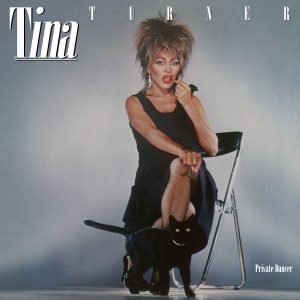
Private Dancer
Tina Turner
Why listen
Electronic pop, soul repertoire and rock arrangements become a coherent album through Turner’s active reshaping of the material.
Listen and read
Tracks · previews
English editorial edition
Album story
Private Dancer is often introduced as a comeback, but its musical construction deserves equal attention. Several production approaches meet here without requiring Tina Turner to become a different singer each time. Her phrasing makes their differences productive.
The 1984 album places an experienced performer inside contemporary pop settings. Electronics do not simply update an older style; the vocal and arrangement keep testing each other. The linked 2015 remaster follows the ten-track UK programme, distinct from the nine-track original American edition. Anniversary bonuses and live recordings are outside this selection. The title track is the extended album performance, not a short single edit.
Different kinds of momentum
Compare the relatively light surface of What’s Love Got to Do with It with the rock force of Better Be Good to Me. Their contrast involves more than volume. Each arrangement gives the delivery a different kind of resistance, making some syllables cut through while others can ride the pulse. Turner’s grainy tone therefore need not mean maximum force throughout. Listen for how a phrase changes the balance of a passage while its backing remains recognisable.
Familiar songs, changed functions
The repertoire reaches from Ann Peebles and Al Green to the Beatles and David Bowie. Recognising a source is only a starting point. Help! becomes a slow appeal near the end, interrupting the forward drive established elsewhere. The subsequent 1984 means the record does not close in a purely reflective ballad mood. These choices matter as a sequence, not merely as demonstrations that Turner can sing songs from several traditions.
A long scene in the middle
The title track lasts over seven minutes here, giving a sustained dramatic scene unusual space among more compact pop structures. Its account of paid performance should not automatically be read as Turner’s diary. Follow how repeated transactions acquire weight, and how the instrumental stretches contribute to that duration. Her life can inform a listener’s response without dictating every interpretation. The album’s achievement lies partly in making borrowed material serve a distinctive performance, beyond the compelling public story of renewed success.
The album through its tracks
Compare the concise second track with the extended fifth, then follow Help! into the closing 1984.
What's Love Got to Do with It
Before waiting for the familiar refrain, notice how the opening delivery handles the pulse. The contrast between an orderly backing and Turner’s rougher articulation makes the song more than a showcase for vocal power. Its question can hold self-protection and uncertainty together without becoming a literal account of the singer’s relationships. Compare this compact structure with the title track’s longer scene: repetition works on a different scale in each. Here, following the changing weight of phrase endings can be more revealing than concentrating only on the famous vocal texture. The backing offers a stable point of comparison while the delivery keeps adjusting what a repeated thought seems to mean.
Reference · Apple Music: 2015 remaster ten-track programmePrivate Dancer
Allow for the full album version rather than anticipating the ending of a shorter single. At over seven minutes, the song gives repeated descriptions of paid performance time to become uncomfortable, and leaves room to notice the relationship between singing and instrumental passages. The character is not automatically the performer herself. A useful question is how Turner turns a scene written by someone else into a sustained act of interpretation. Its fifth position also slows the album’s larger movement before the following track changes the setting. The title may suggest an emblem of triumph, but the song’s transactional world complicates that expectation and the simplest version of the album’s comeback narrative.
Reference · Apple Music: 2015 remaster ten-track programme
Listen next
With Cyndi Lauper’s She’s So Unusual, compare two ways of turning varied repertoire into a specific pop identity.
She's So Unusual ↗References & editorial note
Written for English readers. Album facts are referenced below; listening suggestions are editorial interpretations. AI-assisted editorial review; not independently human-reviewed.