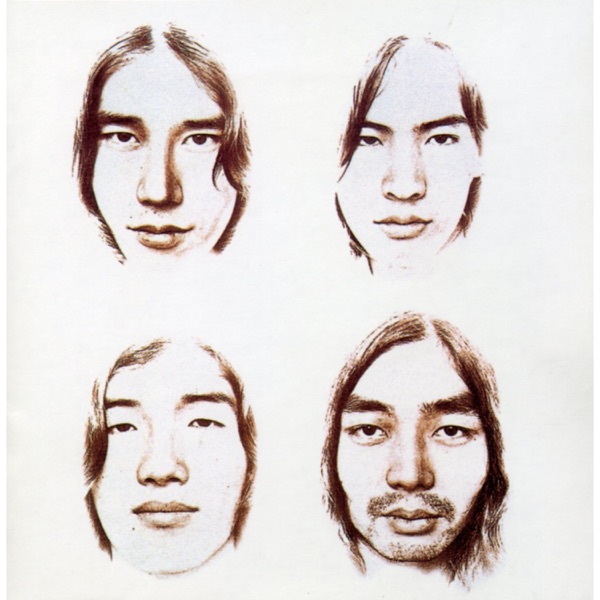
Rock / Rock beyond the US & UK · 1971
Kazemachi Roman
Happy End
風街ろまん · はっぴいえんど
Why listen
Conversational singing and an unhurried band turn streets and seasons into close listening. Enter through the songs before treating this record as a chapter in Japanese rock history.
Listen and read
Tracks · previews
English editorial edition
Album story
Kazemachi Roman often feels like a thought arriving during a walk. The guitars and drums belong to a rock band, but the voice need not hurry to keep up. Ordinary surroundings acquire a different scale when a song changes the pace at which you notice them.
Happy End released this second album in 1971. Its historical reputation can be useful context, yet the more immediate attraction lies in the fit between speech and playing. Listen to the length of a sung phrase, the pause it leaves and the instrument that enters that pause. Even without understanding Japanese, those relationships offer an accessible way into the record.
A language inside the band
The critical interest here is specific: everyday vocal inflection becomes part of the musical shape. The words are not simply information carried over a backing track. Their timing helps determine the movement of the song. A Japanese-speaking listener can follow the images, while another listener can begin with the changing length of the phrases. This does not require claiming that one album created everything that followed in Japanese music. The audible meeting of language and ensemble is substantial enough.
More than one shade of nostalgia
The relaxed movement of “Kaze wo Atsumete” and the seasonal atmosphere of “Natsu Nandesu” might suggest a uniformly gentle record. Across the sequence, however, guitars and voices take different amounts of space. Attention shifts between the singer and the exchanges within the band. Hearing a familiar song alongside its neighbours reveals those changes. An album associated with remembered landscapes can also be approached as a set of contrasting performances, rather than a single mood to leave in the background.
A reputation that needs a personal entry
Tower Records presented the album as an important Japanese rock recording again in its 2023 reissue announcement. That documents later recognition, not a unanimous response from the original audience. Your own point of entry can be smaller: a guitar phrase or a song that fits your walking pace. Follow that attraction into the next track. The record then becomes something to spend time with, rather than an obligation to admire because it appears in histories of the genre.
The album through its tracks
Follow the pace of the band and the breathing room around the voice. Personal memories of a place can be part of listening without becoming claims about the songwriter’s intentions.
風をあつめて — Kaze wo Atsumete
The title suggests gathering the wind, and the conversational delivery makes passing scenery feel briefly close. An unhurried accompaniment offers a point of entry even when the words are unfamiliar. The record’s renewed presentation in 2023 belongs to its later reception; it need not determine what the song means to you now. Try listening once for the voice and again for the instruments carrying the gaps between phrases. The music does not need a huge chorus to leave an atmosphere behind. That modest scale is worth noticing before approaching the track through its place in a history of Japanese rock.
Reference · Tower Records: 2023 reissue announcement夏なんです — Natsu Nandesu
Summer here can feel less like a rush toward a holiday than a moment of stopping to look around. The accompaniment leaves the voice time, so the season reaches the listener through pacing as well as language. Beside “Kaze wo Atsumete”, the song offers another way of making a landscape musical. Avoid treating that feeling as a single national experience of summer. Compare it with a place or hour you remember yourself. If Japanese is unfamiliar, follow the end of each phrase and the instrumental movement that continues after it. A lasting impression can begin there, before a detailed reading of the words.
Reference · Tower Records: 2023 reissue announcement
Listen next
Yumi Arai’s debut offers another meeting between a distinctive conversational voice and carefully shaped accompaniment.
Hikō-ki Gumo ↗References & editorial note
Written for English readers. Album facts are referenced below; listening suggestions are editorial interpretations. AI-assisted editorial review; not independently human-reviewed.