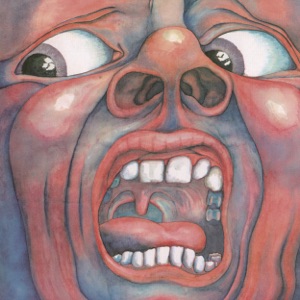
Rock / Progressive rock · 1969
In the Court of the Crimson King
King Crimson
Why listen
A fierce opening, flute-led song, broad melodies and open textures make five tracks feel like five differently sized rooms.
Listen and read
Tracks · previews
English editorial edition
Album story
The abrasive first track does not tell the whole story of this debut. Immediately afterwards, I Talk to the Wind changes the scale through flute and song. Epitaph, Moonchild and the closing title track then give duration three different purposes. Instead of deciding which sound represents the real King Crimson, consider why such contrasting pieces belong together. Five tracks can create an unusually varied journey without becoming a collection of unrelated styles.
Released in October 1969, the album brings together Robert Fripp’s guitar, Greg Lake’s bass and singing, Ian McDonald’s reeds and keyboards, Michael Giles’s drums and Peter Sinfield’s words. The instrumentation matters because it permits different relationships within the same ensemble. This presentation selects the first five tracks from the current expanded distribution of the remastered original mix. Its radio version, duo version and live bonus are outside the original programme.
Two contrasting entrances
After the opening track, do not measure the flute-led second song solely against its predecessor’s force. A different kind of melodic movement becomes possible. The contrast is more than a reduction in volume: instruments can press forward together or leave room for a line to develop. Neither approach needs to be declared the band’s authentic identity at the expense of the other.
Duration has several uses
Epitaph’s broad melodic scale and Moonchild’s more open movement occupy time differently. During the latter, try releasing the expectation that a familiar verse or refrain must quickly return. Smaller interactions can become the event. A long track is not a single kind of experience, and the sequence makes that difference more apparent than a playlist of the most immediate passages would.
The final change of scale
The title track restores a broad scene after Moonchild without simply repeating the opener’s abrasive impact. Listen to the vocal and instrumental scale, including the Mellotron colours. Stop at the fifth track before continuing into bonus material, and consider the contrasts that led there. The album’s construction can be heard before any definition of progressive rock needs to be learned.
The album through its tracks
Compare the first two tracks, then follow the change of scale from Moonchild to the title track.
21st Century Schizoid Man
After the initial shock of the sound, notice how the ensemble moves together. Treating everything as sheer aggression can obscure the relationships between guitar, reeds and rhythm. Compare the sections with singing to the instrumental activity that takes the foreground. You need not analyse every rapid figure to notice the tension created when several players change direction together. The arrival of flute in the following song then challenges the identity the opener has just established. This selection includes Mirrors within the regular album track. It is distinct from the radio version placed among the expanded issue’s bonuses; a matching main title alone does not make those two entries interchangeable.
Reference · Qobuz / DGM: Expanded & Remastered Original Album Mix, credits and complete track lengthsI Talk to the Wind
After the forceful opening ensemble, consider what happens when flute leads the melodic movement. DGM preserves an early session take with Ian McDonald playing flute, but the selection here is the finished album track rather than that archival performance. Listen to the different roles of singing and instrumental melody instead of treating the song as a pause before more important action. Its position after the first track is part of its effect, so compare hearing it alone with restoring the album sequence. The bonus duo version is also excluded. Shared words in a title do not make a different arrangement, personnel balance and duration a substitute for this track.
Reference · DGM session archive: Ian McDonald flute and early I Talk to the Wind take
Listen next
Continue with Yes’s Close to the Edge and compare five contrasting scenes with an album built from three extended compositions.
Close to the Edge ↗References & editorial note
Written for English readers. Album facts are referenced below; listening suggestions are editorial interpretations. AI-assisted editorial review; not independently human-reviewed.
- DGM: debut album history and edition distinctions · dgmlive.com
- Qobuz / DGM: Expanded & Remastered Original Album Mix, credits and complete track lengths · www.qobuz.com
- DGM session archive: Ian McDonald flute and early I Talk to the Wind take · dgmlive.com
- Steven Wilson: separate 2009 and 2019 remixes · stevenwilsonhq.com
- Apple Music: licensed expanded distribution · music.apple.com