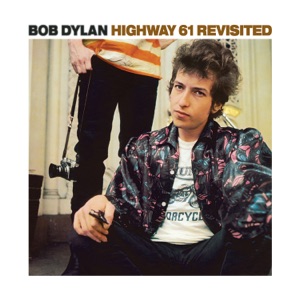
Rock / Singer-songwriters & American rock · 1965
Highway 61 Revisited
Bob Dylan
Why listen
Extended vocal phrases and an active band move together, while the acoustic closing song changes the density without shrinking the scale.
Listen and read
Tracks · previews
English editorial edition
Album story
When Dylan pushes a long phrase through Like a Rolling Stone, the band does not simply wait for the words to finish. Organ, guitar and rhythm participate in the forward motion. If this album first appears to demand reading and decoding, begin with that relationship. The changing length and emphasis of phrases can be heard before every image is explained. By Desolation Row, a leaner instrumental setting sustains a different kind of extended movement.
Released in 1965, the album credits Dylan on guitar, harmonica and piano alongside musicians including guitarist Michael Bloomfield and keyboard players Al Kooper and Paul Griffin. An album-wide personnel list does not mean that every player appears on every song. The acoustic finale is an important contrast to the electric settings before it. This presentation uses the original nine-song studio programme, separate from mono compilations, session alternatives and later concerts.
Language moves through a beat
Once the opening song’s large repeating form becomes familiar, notice how words occupy it. Does each phrase use the same amount of time and emphasis? The band gives extended lines somewhere to travel. Reading a sentence and hearing it sung happen at different speeds. Let one verse finish before stopping to solve its meaning, and the performance’s shaping of language can become clearer.
Nine tracks are not one tone
The propulsion of Tombstone Blues and the heavier atmosphere of Ballad of a Thin Man need not become interchangeable simply because the singer is the same. Changes in keyboards, guitar and rhythm alter where the words sit. Shorter pieces and the long finale also use time differently. Comparing the singer’s relationship to each arrangement offers an entrance without imposing one symbolic explanation on the entire record.
A different density at the end
Desolation Row extends beyond ten minutes with an acoustic setting. Reduced instrumental weight need not remove tension. Follow guitar movement around the continuing vocal phrases and consider how new details emerge during an apparently stable form. Hearing the ending prevents an account of the album’s electric turn from flattening its actual sequence. Less sound can still support a composition on a large scale.
The album through its tracks
Compare the band’s motion around the opening vocal with the leaner setting that sustains Desolation Row.
Like a Rolling Stone
After recognising the broad recurring shape, concentrate on how the voice uses time inside it. An extended sentence does not stop the band from providing somewhere for the next emphasis to land. Organ and guitar are not unimportant because they stand behind the singer. Notice which sounds sustain the forward movement and make the division between singing and accompaniment less simple. Understanding every word immediately is not essential: follow the breath across a verse and the force of a returning section. This is the first track of the regular nine-song album, not a shortened single or rehearsal take. Later concert changes in phrasing should not be mistaken for this original studio performance.
Reference · Qobuz / Columbia: matching album versions and durationsDesolation Row
The acoustic setting gives the final track a different density from the electric pieces preceding it. A long song need not require more instruments or a larger volume. Follow the guitar movement between vocal phrases and the changing length of the sentences; attention can shift while the underlying form remains familiar. There is no requirement to identify every figure and scene before listening becomes possible. On a first encounter, consider what persists and what changes as successive verses pass. The selection is the complete closing studio track, distinct from alternative session arrangements and short excerpts. Arriving here after the whole album makes the choice to reduce the instrumental weight more apparent.
Reference · Rock and Roll Hall of Fame store: acoustic closing track within the electric album
Listen next
Continue with Pink Floyd’s Wish You Were Here and compare a long closing song with an extended composition divided between the beginning and end.
Wish You Were Here ↗References & editorial note
Written for English readers. Album facts are referenced below; listening suggestions are editorial interpretations. AI-assisted editorial review; not independently human-reviewed.
- Bob Dylan official album page: original nine tracks and instrumental credits · www.bobdylan.com
- Legacy Recordings: official album listing · www.legacyrecordings.com
- Qobuz / Columbia: matching album versions and durations · www.qobuz.com
- Rock and Roll Hall of Fame store: acoustic closing track within the electric album · shop.rockhall.com
- Apple Music: current nine-track studio distribution · music.apple.com