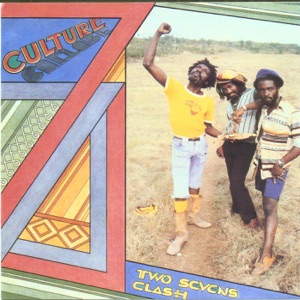
Reggae / Latin / Roots reggae · 1977
Two Sevens Clash
Culture
Why listen
An urgent lead voice and welcoming harmonies let anxiety and conviction share the same groove.
Listen and read
Tracks · previews
English editorial edition
Album story
The lead voice sounds pressed for time; the harmonies sound ready to be sung again. That tension gives Two Sevens Clash an immediate appeal. A weighty bass and short rhythmic strokes leave room around Joseph Hill’s grainy delivery. Instead of treating the bright melodies as reassuring background, follow the moments when the other voices gather around his phrases.
Culture’s 1977 debut brought together Hill, Albert Walker and Kenneth Dayes, with production by Joe Gibbs and Errol Thompson. Rastafari belief and aspirations for Black liberation inform its songs. This is a particular vocal group’s expression of those concerns, rather than a template for every reggae record. A line that begins as one person’s address can acquire a collective presence when the harmony enters.
Changing directions of address
In the original ten-song order, Calling Rasta for I opens the record. I’m Alone In the Wilderness and Pirate Days lead towards the title track and I’m Not Ashamed. Later, Get Ready to Ride the Lion to Zion and Black Starliner Must Come suggest movement and arrival. You need not impose a single plot on them. Notice instead how invocation, isolation and declarations of belief change the direction of the singing.
The spaces between voices
Separate the bass’s sustained weight from the shorter strokes around it. Because the arrangement leaves openings, the lead’s upward pressure and the answering harmonies remain distinct. The supporting voices do not remove Hill’s roughness; they place another texture beside it. When a phrase returns, compare the distance between those textures rather than merely asking whether the performance has grown louder.
Beyond the prediction
The two sevens connect the title to apocalyptic expectations around 1977, but later recollections are not the same as contemporary documentation. The record offers more than a test of a prophecy: it lets us hear people singing together within uncertainty. The linked edition follows the original ten-song programme, about thirty-three minutes. Leave the anniversary editions’ extra versions for another listening session, and first let Natty Dread Taking Over complete this compact sequence.
The album through its tracks
Follow the bass once, then follow the transition from the lead voice into the harmonies.
Two Sevens Clash
A warning carried by an easily retained melody can feel unsettling and inviting at once. VP’s 2017 reissue account says that the song prompted Jamaican businesses and schools to close on 7 July 1977. That is a later label account, not independent confirmation here of an entire city shutting down. Keeping that distinction allows attention to return to the performance. Follow the rough ends of Hill’s phrases first, then the moments when the harmony gathers around them. Repetition turns a warning into something a group can remember and sing together. The tension lies partly in that coexistence: difficult expectations carried by a form that welcomes another voice.
Reference · VP Records: 2017 fortieth-anniversary account, vocal trio and original ten songsI'm Not Ashamed
Following the title track, this song turns attention from a warning towards a declaration of belief. Its short central statement gives the voices a clear point around which to gather. On the original ten-song programme it closes the first side, a useful reason to leave a moment after it rather than immediately skipping ahead. Learn the returning phrase, then listen to how closely the voices overlap around it. Hill’s rough texture need not register only as anger: firmness and relief can coexist within it. The harmonies soften the surrounding texture without necessarily weakening the declaration. Listen for how a shared sound sustains what begins as an individual commitment.
Reference · VP official store: original ten-track order and Joe Gibbs/Errol Thompson production
Listen next
Compare Marcus Garvey to hear a different relationship between lead voice, harmony and Rastafari themes.
Marcus Garvey ↗References & editorial note
Written for English readers. Album facts are referenced below; listening suggestions are editorial interpretations. AI-assisted editorial review; not independently human-reviewed.
- VP Records: 2017 fortieth-anniversary account, vocal trio and original ten songs · www.vprecords.com
- VP official store: original ten-track order and Joe Gibbs/Errol Thompson production · www.vpreggae.com
- Apple Music US: ten-track VP edition in original programme order · music.apple.com
- Shanachie: thirtieth-anniversary edition and five added tracks · www.shanachie.com