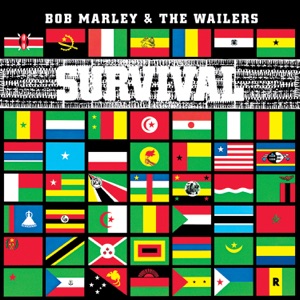
Reggae / Latin / Roots reggae · 1979
Survival
Bob Marley & The Wailers
Why listen
A rhythm that invites movement can carry a demand as well as a celebration.
Listen and read
Tracks · previews
English editorial edition
Album story
The chorus of “Zimbabwe” offers something to join, while the rhythmic lift keeps its seriousness from becoming static. On Survival, Marley’s voice often reaches out to assemble a company rather than simply disclose a private feeling. Follow the bass beneath that invitation and the short accompaniment figures around it. Dancing and forgetting the world are not equivalent activities here.
This is Jamaican roots reggae looking towards African liberation and solidarity, not an anthology of African traditional music. Released in 1979 and produced by Bob Marley & The Wailers with Alex Sadkin, the album gives its arguments a band’s momentum. The words matter, but so does the musical space that allows them to return, gather force and become shared rather than merely delivered.
From a broad view to a named place
“So Much Trouble In the World” opens with a wide horizon before “Zimbabwe” supplies a specific name. The sequence moves through “Top Rankin’” and “Babylon System” towards the title track. Political subject matter does not make every song an identical solemn statement. Notice where the voice presses harder and where the accompaniment makes room. The difference between pressure and movement can keep a familiar rhythm newly engaging.
Keep the historical sequence clear
“Zimbabwe” appeared on the 1979 album before Marley performed it at the country’s independence celebrations in 1980. The song therefore was not written as a retrospective salute to an already completed independence. Its later performance shows music meeting a particular historical occasion. That does not make the record solely responsible for political change or turn the singer into the voice of every participant.
An ending, then an addition
“Africa Unite” leads into “One Drop,” suggesting a passage from a call for solidarity to attention to shared rhythmic time. The original ten tracks end with “Wake Up and Live.” The linked 2013 remaster adds a twelve-inch mix of “Ride Natty Ride.” Stop at the original ending first, then hear that extra track separately. An album’s conclusion and an extended version’s use of time are different pleasures.
The album through its tracks
Compare Zimbabwe and Africa Unite, then let the original programme end with Wake Up and Live before the bonus mix.
Zimbabwe
Notice the point where a returning chorus opens an individual statement to a larger company. An accessible tune need not soften the demand it carries. The song preceded the independence occasion at which Marley later performed it, but that history need not turn every sound into a symbol. Follow the bass and the force of the vocal sentences separately, then hear them together. Where does the delivery grow firmer while the rhythm continues to move? Keep the country’s specific name in view rather than replacing it with an abstract slogan. At the same time, listen to the musical choices that make a historically situated song something people can sing together.
Reference · Bob Marley official: Survival1979, original tracklist and historical contextAfrica Unite
A direct call and a repeating rhythm work alongside each other here. The subject is Pan-African solidarity, not a claim that a continent has one culture or one political experience. Once you have registered that distinction, return to the placement of the voice. How long does each phrase travel across the beat, and what room remains after it finishes? You do not need specialist rhythmic terminology to hear those openings. Continue into “One Drop” without pausing and notice the change of emphasis from a spoken aim to a sense of shared musical time. Treat that connection as a listening interpretation rather than proof that the album follows a single declared conceptual plan.
Reference · Bob Marley official: Survival1979, original tracklist and historical context
Listen next
Return to Exodus to compare how movement and solidarity sit beside love songs in a different album sequence.
Exodus ↗References & editorial note
Written for English readers. Album facts are referenced below; listening suggestions are editorial interpretations. AI-assisted editorial review; not independently human-reviewed.