Reggae / Latin / Dancehall & beyond · 1982
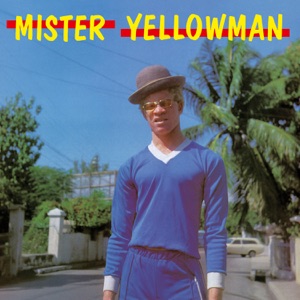
Mister Yellowman
Yellowman
Why listen
A mobile voice changes the weight of a spare, steady rhythm.
Listen and read
Tracks · previews
English editorial edition
Album story
Yellowman’s voice does not sit politely above the accompaniment on Mister Yellowman. A phrase presses forward, then leaves a gap through which the rhythm comes into focus. The space between the vocal and the bass can be as engaging as the words rushing to fill it.
Issued by Greensleeves in 1982, the album offers a particular encounter with Jamaican dancehall and its deejay tradition. Here deejay means the microphone performer voicing over a rhythm, rather than simply the person selecting records. Henry “Junjo” Lawes produced the album. Greensleeves credits backing by the Roots Radics and Earl Chinna’s Hi-Times Band, with a stripped-back mix by Soldgie.
Words moving against a pattern
The accompaniment can maintain its course while the length of a spoken or sung phrase keeps changing. Listen for syllables crowding into one passage and the room left after another. You do not have to decode every word immediately to follow that movement. Equally, the language is more than a collection of entertaining sounds. Let rhythm provide an entry point, then return to the meaning and context of phrases that catch your attention.
The band is not just background
A sparse arrangement makes it easier to hear how bass and drums provide continuity beneath an active vocal. Short instrumental responses and the placement of accents deserve a separate pass through the record. Early dancehall should not automatically be imagined as an entirely digital sound: this album has credited backing bands. Its economy concerns what is left audible and how the parts share space, not the absence of musicianship.
Personality without a universal spokesman
The label’s description places humour, rudeness and seriousness alongside one another. There is no need to make every joke harmless, or to turn one performer’s delivery into the voice of an entire country. Follow the ten-track sequence and notice how the manner of address changes. The lasting interest lies in an exchange: when the voice pauses, the accompaniment advances; when another phrase arrives, the same rhythm takes on a different emphasis. Those small reversals keep the album physically engaging without requiring a crowded production.
The album through its tracks
Follow vocal breath on one pass, then the bass and drums that remain audible between phrases.
Natty Sat Upon the Rock
The opener introduces the performer through movement rather than a long explanation. Follow the differing lengths of phrases over the recurring backing. Where syllables collect and where they briefly disappear, the voice can create accents without replacing the underlying beat. On a second pass, make the bass your point of reference. Does its repetition seem steadier as the vocal becomes more mobile? Recognising one phrase’s shape can be a useful beginning even before you understand every word. This is not a claim that the album documents a live audience or a particular dance. It is an invitation to hear how a microphone performer’s rhythmic decisions work within a studio recording.
Reference · Greensleeves: Mister Yellowman, programme and production contextHow You Keep a Dance
Try switching the apparent roles of voice and backing while listening. Begin with the vocal accents, then continue counting the pulse when the voice leaves space. When another phrase arrives, does it feel like a fresh start or an entrance into something already moving? Separating the lower notes from shorter instrumental sounds can make the gaps more tangible. Deejaying in this context is not merely choosing and playing records; placing words against a rhythm is itself the performance. There is no need to understand every sentence at once, but neither should the language be treated as irrelevant. Let the sound encourage a return to the particular meanings rather than replace them.
Reference · Greensleeves: Mister Yellowman, programme and production context
Listen next
Continue with King Tubbys Meets Rockers Uptown to compare what happens when backing and space move into the foreground.
King Tubbys Meets Rockers Uptown ↗References & editorial note
Written for English readers. Album facts are referenced below; listening suggestions are editorial interpretations. AI-assisted editorial review; not independently human-reviewed.