Blues / Blues rock & the British blues boom · 1969
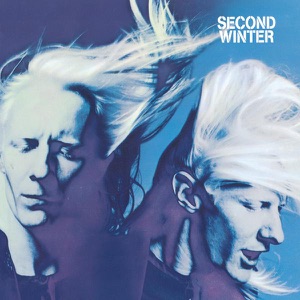
Second Winter
Johnny Winter
Why listen
Electric mandolin, concentrated rock-and-roll covers and an extended original reveal several kinds of invention beyond fast guitar playing.
Listen and read
Tracks · previews
English editorial edition
Album story
Speed is only one attraction of Second Winter. The electric mandolin on I’m Not Sure changes the surface early on; familiar rock-and-roll songs later arrive in compact succession, while Fast Life Rider stretches the conclusion to about seven minutes. Timbre and proportion matter alongside technique. The original three-sided layout groups these differences rather than presenting eleven interchangeable demonstrations of virtuosity.
The 1969 album brings together Johnny Winter’s singing and string playing, Edgar Winter’s keyboards and wind instruments, Tommy Shannon’s bass and John Turner’s percussion. Dennis Collins supplies bass on The Good Love. This is a broader instrumental resource than the image of a solitary guitar hero suggests. Songs associated with Percy Mayfield, Chuck Berry and Bob Dylan also share the programme with Winter’s originals.
Experiments on the first side
Memory Pain, I’m Not Sure and The Good Love form the opening group. In a later interview, Winter identified electric mandolin on I’m Not Sure and wah-wah on The Good Love and Fast Life Rider. These choices offer distinct ways of changing a string instrument’s attack and contour. Placing the latter two songs far apart also lets an altered timbre serve as an early discovery and a later return.
Three rockers and a highway
The second side moves through Slippin’ and Slidin’, Miss Ann and Johnny B. Goode before closing with Highway 61 Revisited. Three compact song frameworks precede a longer reworking of Dylan. Recognition and reinterpretation coexist here. The slide guitar’s connected motion carries activity through spaces between sung phrases, giving the performance a forward pull that does not depend solely on waiting for a featured solo.
Originals take over the conclusion
All four songs on the final side are Winter originals. Hustled Down in Texas separates the opposing titles I Love Everybody and I Hate Everybody; the short latter song then leads to the expansive Fast Life Rider. Moving from the central covers into this concluding group connects the interpreter’s choices with the songwriter’s. The sequence leaves more to remember than a display of speed: different instruments, borrowed frameworks and original material shape the record together.
The album through its tracks
Compare the electric mandolin of I’m Not Sure with the slide guitar of Highway 61 Revisited, concentrating on how each kind of string attack changes the rhythmic surface.
I’m Not Sure
The second track lasts approximately five minutes and nineteen seconds. Winter identified its electric mandolin in his 2004 interview, providing a concrete clue to a sound easily assumed to be another guitar part. Separate the beginning of each plucked sound from its resonance afterwards. The way an attack meets the rhythm can become more revealing than simply counting fast notes. Its position after Memory Pain is useful too: the opening side introduces a different instrumental surface within an already forceful setting. When a phrase returns, compare the weight of the accompaniment around it. This original establishes an experimental possibility before the album reaches its more familiar rock-and-roll material.
Reference · Guitar World 2004 interview by Andy Aledort, archived transcript: Winter and band recollectionsHighway 61 Revisited
This seventh track reworks Bob Dylan’s song in a studio performance lasting approximately five minutes and four seconds. It follows Johnny B. Goode and closes the original second side. The slide guitar’s connected lines sustain motion between the sung phrases, so activity need not stop when the words do. Hear the instrument as something interlocking with each verse rather than merely waiting for a solo spot. The preceding compact rockers establish familiar frameworks; this longer performance gives that movement more room. I Love Everybody then opens the concluding group of originals. The track is therefore both a recognizable cover and a boundary between groups, distinct from later live performances of the same song.
Reference · Qobuz: standard eleven-track Columbia edition, credits and durations
Listen next
Continue to Canned Heat’s Boogie with Canned Heat and compare another blues-rock band’s route from existing songs and originals to an extended final track.
Boogie with Canned Heat ↗References & editorial note
Written for English readers. Album facts are referenced below; listening suggestions are editorial interpretations. AI-assisted editorial review; not independently human-reviewed.
- Sony Music Japan: 1969 album, original eleven songs distinguished from bonuses · www.sonymusic.co.jp
- Qobuz: standard eleven-track Columbia edition, credits and durations · www.qobuz.com
- Guitar World 2004 interview by Andy Aledort, archived transcript: Winter and band recollections · vinyl-records.nl
- Original three-side track layout documented by cover archive · tralfaz-archives.com
- Apple Music: standard US eleven-track studio album · music.apple.com
- Legacy Recordings: separate 22-track edition including live disc · www.legacyrecordings.com