Classical / Baroque · 1981
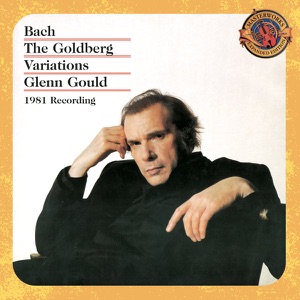
Bach: Goldberg Variations 1981
Glenn Gould
바흐: 골드베르크 변주곡 (1981년 녹음) · 글렌 굴드
Why listen
Gould makes the return of the opening aria feel like a change in the listener’s memory, not merely a repeated track.
Listen and read
Tracks · previews
English editorial edition
Album story
A note is allowed to settle before another takes its place, yet the music does not dissolve into a blur. In Glenn Gould’s second studio Goldberg Variations, clarity and spaciousness coexist: separate lines remain audible even when the pace invites close attention to the gaps between them.
Bach published BWV 988 in 1741. Gould recorded this performance in 1981 and the album appeared in 1982; those are three different points in its history. The listening edition here is the 2015 remaster of that performance, containing the opening aria, thirty variations and the aria’s return. It is distinct from the 1955 recording and from later releases of session material.
Find the foundation
The variations are not simply thirty decorations of the aria’s top melody. A recurring bass and harmonic framework holds the changing surface together. Try listening below the tune for a moment, then move your attention upwards. Gould’s separation of lines makes that exercise unusually rewarding: a busy passage can still reveal a steady underlying direction. You do not need to identify every note to hear that the same space is being furnished differently.
Listen across the boundaries
Calling the performance slow misses its range of movement. There are brisk, compact variations as well as expansive ones. The transition from Variation 15 to the opening gesture of Variation 16 offers a particularly clear change of scale. Let one ending remain in your memory while the next beginning arrives. The connections can matter as much as the character of an individual movement, and the longer Variation 25 gains weight from its shorter neighbours.
Beyond a farewell narrative
The album won the 1983 Grammy for instrumental solo performance without orchestra, an early recognition distinct from the later fascination with its studio history. Its proximity to Gould’s death has encouraged listeners to hear a farewell. That story need not dictate the experience. When the aria returns, the notes are familiar but your attention has travelled through thirty different settings. Compare the opening and closing tracks, then hear the complete sequence: the most revealing difference may be what you remember.
The album through its tracks
Compare the opening aria with Aria da capo, then follow the transition between Variations 15 and 16 during a complete listen.
Goldberg Variations, BWV 988: Aria (1981 Recording)
Attend to the spacing rather than measuring slowness alone. The ornamented upper line moves across a lower part that retains its own direction; Gould lets both remain legible. First follow the melody, then replay the passage while listening mainly to the bass. The change in attention reveals how much is happening beneath an apparently simple surface. This aria will return after thirty variations, so it also establishes a memory that the rest of the performance can reshape. Comparing it immediately with Aria da capo is useful, but hearing the complete journey makes the return more telling. A short preview cannot reproduce that larger experience of recognition.
Reference · Glenn Gould official discography:1981 recording released1982Goldberg Variations, BWV 988: Variation 25 a 2 Clav. (1981 Recording)
Variation 25 asks you to wait for tensions to loosen. Closely spaced pitches rub against one another within a slow line, and a phrase can seem ready to settle before continuing elsewhere. Rather than labelling the whole passage sad, notice which voice remains steady while another moves. Gould’s clear separation helps keep the detail audible without making the music feel like an exercise. This performance lasts about six minutes; follow it with the much shorter Variation 26 to feel the change in density and motion. Returning to Variation 24 before hearing the pair again restores its place in the larger sequence. Duration becomes a relationship, not just a number.
Reference · Netherlands Bach Society:BWV988work structure,1741publication
Listen next
Gould’s 1955 recording offers a direct comparison of phrasing and the distances between variations.
Bach: Goldberg Variations 1955 ↗References & editorial note
Written for English readers. Album facts are referenced below; listening suggestions are editorial interpretations. AI-assisted editorial review; not independently human-reviewed.
- Glenn Gould official discography:1981 recording released1982 · glenngould.com
- Sony Classical:2022 complete1981studio sessions and originalrelease chronology · www.sonyclassical.com
- Apple Music:1981recording,2015remaster · music.apple.com
- Netherlands Bach Society:BWV988work structure,1741publication · www.bachvereniging.nl
- Recording Academy:1983instrumental soloist winner · www.grammy.com
- Glenn Gould official:discussion with Tim Page · glenngould.com