Classical / Classical era · 1996
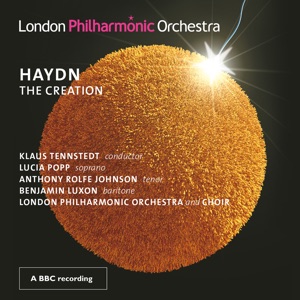
Haydn: The Creation
John Eliot Gardiner
하이든: 천지창조 · 존 엘리엇 가디너
Why listen
Changes between solo narration, sustained song and collective response make a long oratorio easier to follow.
Listen and read
Tracks · previews
English editorial edition
Album story
The Creation has an enormous subject, but a small listening question can open it up: who takes over the scene next? A single narrator gives way to several voices, or speechlike movement becomes extended song. Follow those transfers in Gardiner’s recording instead of trying to absorb the entire work as one monumental statement.
The label’s track data distinguish a February 1995 recording at All Saints’ Church in London from first release in 1996. The original product page’s 1997 date and the selected service’s 2006 date belong to its issue history. The Monteverdi Choir and English Baroque Soloists perform with five principal soloists. This German-language work has three parts, while the chosen edition divides it into two discs and thirty-two tracks: a disc boundary is not automatically a structural division.
Chaos before a speaking voice
In the opening orchestral introduction, resist predicting exactly where the next sound will settle. No narrator explains the scene yet; the orchestra establishes a sense of time first. When solo and choral voices arrive, the terms of listening change. Compare the introduction alone with the transition into the following track. Rather than waiting only for a famous dramatic effect, notice how intervals and durations have prepared an expectation.
Between speaking and singing
A recitative moves the account along in a manner close to speech; an aria gives one voice more room to unfold. A chorus adds collective scale. These are useful distinctions, not an examination syllabus. Ask who speaks and who answers. With Sylvia McNair, Michael Schade and Gerald Finley, listen to phrase endings and the orchestral continuation. A trio creates another size of encounter between an individual solo and the full choir.
A closer view in the final part
Rodney Gilfry and Donna Brown take the roles of Adam and Eve. Attention turns toward a relationship between two figures after the earlier scenes of nature. That shift matters more than the disc numbering. Start with the selected excerpts, then return to their surroundings without assuming two tracks reveal the complete emotional range. The religious narrative need not become a listener’s own belief for the music’s changing modes of explanation and shared attention to remain engaging.
The album through its tracks
Continue from the orchestral introduction into the first vocal track; later compare the trio and full choir in the conclusion of Part I.
Die Vorstellung des Chaos
Before any voice enters, the orchestra establishes the time and space of the scene. This is the first track on disc one, approximately five minutes ten seconds long, in Gardiner’s selected edition. Listen to the intervals between gestures rather than waiting for one spectacular outburst. An apparent promise of arrival can become another period of waiting. You need not identify every instrument to sense that movement. First register the span as a whole, then follow what remains audible in quieter passages. If possible, continue into the next vocal track: the entrance of people into an orchestral space reveals the introduction as an opening to a larger account, not only a self-contained miniature.
Reference · Apple Music: selected two-disc, thirty-two-track performanceDie Himmel erzählen die Ehre Gottes
The conclusion of Part I places a choir and three soloists within one track, allowing different scales of vocal presence to meet. Select disc one, track fourteen, lasting about three minutes forty-five seconds. Instead of treating every voice as a single large mass, notice who comes forward and when the full ensemble returns. Connect the soloists with their earlier appearances to hear the difference between individual song and shared response. Changes in number and distance remain perceptible without a complete translation. Its brightness should not stand for the emotional character of the entire work. This is an arrival reached through earlier scenes, with further acts of description still to come.
Reference · Apple Music: selected two-disc, thirty-two-track performance
Listen next
Continue with Brüggen’s London Symphonies to compare how Haydn changes scale and expectation without voices.
Haydn: London Symphonies ↗References & editorial note
Written for English readers. Album facts are referenced below; listening suggestions are editorial interpretations. AI-assisted editorial review; not independently human-reviewed.