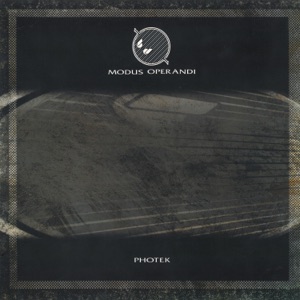
Electronic / Drum and bass & jungle · 1997
Modus Operandi
Photek
Why listen
Intricate percussion and a slower title track reveal different speeds within one carefully shaped musical language.
Listen and read
Tracks · previews
English editorial edition
Album story
The drums on Modus Operandi are not simply an engine for moving faster. The Hidden Camera introduces finely separated attacks, and the tracks that follow keep changing their apparent distance and weight. By the time the slower title track arrives, tempo has become one variable within a much broader method of organising sound.
Rupert Parkes released this ten-track debut as Photek in 1997, with composition and production credited to him. Percussive texture, bass weight and the interval after a sound all contribute to its design. Drum and bass is a useful starting point, but it does not predict every track’s pace or shape.
Different lengths, different pressure
Minotaur is the shortest track at about five minutes eighteen seconds. Immediately afterwards, Aleph 1 extends to nearly nine minutes, the album’s longest span. Both offer time to notice details, but their proximity changes the scale of attention. Rapid attacks encourage anticipation; openings between them make the decay of an earlier sound newly important. Density is something the arrangement can adjust rather than a permanent setting.
The title does not fix the tempo
In his 2012 interview, Parkes stressed the importance of making the title track downtempo instead of allowing a genre category to restrict him. Its eighth position gives that choice particular force. After the extended Trans 7, another pace enters the record without sounding like a separate project. The album’s name can therefore point towards a working method rather than a compulsory speed.
A further journey after the pause
KJZ and The Fifth Column follow the title track, adding two more substantial stretches before the ending. The slower piece is not merely a closing rest. Earlier material also becomes part of this new sequence: the opening track and KJZ carry 1996 recording-rights dates. Their place here matters more than treating the album as a catalogue of isolated singles. Return to the opening after the later pieces and compare how the same producer establishes very different kinds of movement.
The album through its tracks
Compare the shortest and longest tracks, then follow the change of pace from Trans 7 into the title track.
The Hidden Camera
This approximately six-minute forty-nine-second opener offers an immediate way into Photek’s attention to individual attacks. Rather than hearing one busy drum mass, separate the tones and the distances between them. Following a different small sound can change the apparent direction of the same passage. Bass weight and sharply defined percussion occupy the scene together without requiring every moment to be crowded. The track carries a 1996 recording-rights date, so it should not be described as an introduction newly created exclusively for the 1997 album. Compare it with the later title track: each establishes balance and movement, but at a markedly different pace.
Reference · Science / Qobuz — complete ten-track programme, composition and productionModus Operandi
The eighth track occupies roughly seven minutes after the extended Trans 7. Its slower pace makes Parkes’s stated intention tangible: the piece sharing the album’s name need not display the fastest drums. There is more room to notice the distance between events, while the attention to placement remains. Hear the change as another proportion of the same musical world, not just a break from difficult programming. KJZ and The Fifth Column still follow, so this is a turning point within the later sequence rather than a final resting place. Returning here after the whole album makes the title’s suggestion of a working method especially apt.
Reference · FACT — Photek interviewed by Kiran Sande on Modus Operandi, 2012
Listen next
Compare Roni Size / Reprazent’s New Forms from the same year for another approach to ensemble, sequence and album-length drum and bass.
New Forms ↗References & editorial note
Written for English readers. Album facts are referenced below; listening suggestions are editorial interpretations. AI-assisted editorial review; not independently human-reviewed.
- FACT — Photek interviewed by Kiran Sande on Modus Operandi, 2012 · www.factmag.com
- Science / Qobuz — complete ten-track programme, composition and production · www.qobuz.com
- Mixed Up Records — authorized Proper reissue UMCLP076, original programme · www.mixeduprecords.com
- Apple Music — Modus Operandi, current Virgin ten-track delivery · music.apple.com