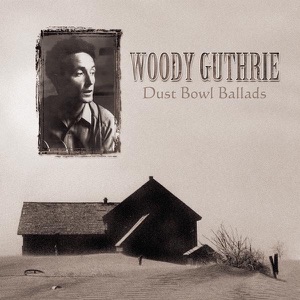
Folk / Country / Roots & prewar recordings · 1940
Dust Bowl Ballads
Woody Guthrie
Why listen
Speech rides a steady guitar pulse, then turns into song. Begin with the storyteller’s timing before trying to absorb the entire historical reputation.
Listen and read
Tracks · previews
English editorial edition
Album story
Try Talkin’ Dust Bowl Blues without waiting for a large chorus. Follow the space between a steady guitar and a sentence that keeps changing length. A pause can feel like an invitation to react. Even if unfamiliar words escape you, the relationship between speaking and keeping time offers an immediate way into the record. Its age need not be your first subject.
These 1940 recordings concern people displaced by the Dust Bowl. The linked fifteen-track digital edition carries Buddha’s 2000 copyright; it is not the original two-volume 78-rpm configuration. An alternate Talkin’ Dust Bowl Blues closes this edition. Treat it as another performance of an existing song, not a new chapter with a different title. Recording history and the package available today are related but separate questions.
Follow changes in delivery
Move from the talking blues to I Ain’t Got No Home In This World Anymore. Listen for the point where a sentence settles into melody and stays there longer. The surroundings need not become elaborate for the emotional scale to change. This is a useful exercise if the old recording initially seems uniform: compare the endings of phrases rather than expecting a different instrumental colour at every turn.
An easy tune can carry a difficult thought
Do Re Mi offers a memorable shape without making the circumstances comfortable. Let that tension remain. A song can be inviting while its warning resists easy optimism. You need not decode every line immediately or turn every brisk movement into a sign of happiness. Asking why the delivery feels approachable may tell you more than deciding in advance that historical hardship must always sound solemn.
A reputation is not an entrance requirement
The Library of Congress revisited the album in 2022, evidence of continuing attention rather than a report of unanimous contemporary approval. Start with two short performances if the sound feels distant. Return later to the guitar’s role in making room for words. No obligation to admire an important figure is necessary. What matters on that first encounter is whether one person’s timing makes you want to hear the next sentence.
The album through its tracks
Compare Talkin’ Dust Bowl Blues with I Ain’t Got No Home, then return to Do Re Mi. The final alternate version belongs to the expanded edition.
Talkin' Dust Bowl Blues
Keep an ear on the guitar while the spoken phrases stretch. The accompaniment leaves a path for a sentence rather than demanding that every thought become a melodic hook. The Library of Congress places this song among accounts of migrant hardship. That context helps, but it is still a shaped performance rather than an unedited field interview. Humour and trouble can occupy the same voice. After the main performance, compare the alternate version at the end of this digital edition. Listen for spaces between statements rather than simply checking that the words concern the same subject. A preview supplies an entrance, not the whole narrative or a definitive judgement about its ending.
Reference · Library of Congress: Song Stories, Dust Bowl Ballads (2022 retrospective)Do Re Mi
The title suggests something as simple as learning a tune. Keep the warning about arriving in California without money beside that approachable musical shape. The song need not sound forbidding to question a promise of opportunity. Its place in a record about displacement is more useful than claiming that one singer represents every migrant. On a first pass, follow the movement of voice and guitar; on another, notice how the practical problem of money interrupts the idea that moving west will solve everything. You can recognise the force of that question without treating every later migration as an identical experience. The historical specificity makes the comparison more thoughtful.
Reference · Library of Congress: Song Stories, Dust Bowl Ballads (2022 retrospective)
Listen next
Continue with Johnny Cash’s At Folsom Prison and compare a solitary narrative voice with one performing before a visibly specific audience.
At Folsom Prison ↗References & editorial note
Written for English readers. Album facts are referenced below; listening suggestions are editorial interpretations. AI-assisted editorial review; not independently human-reviewed.