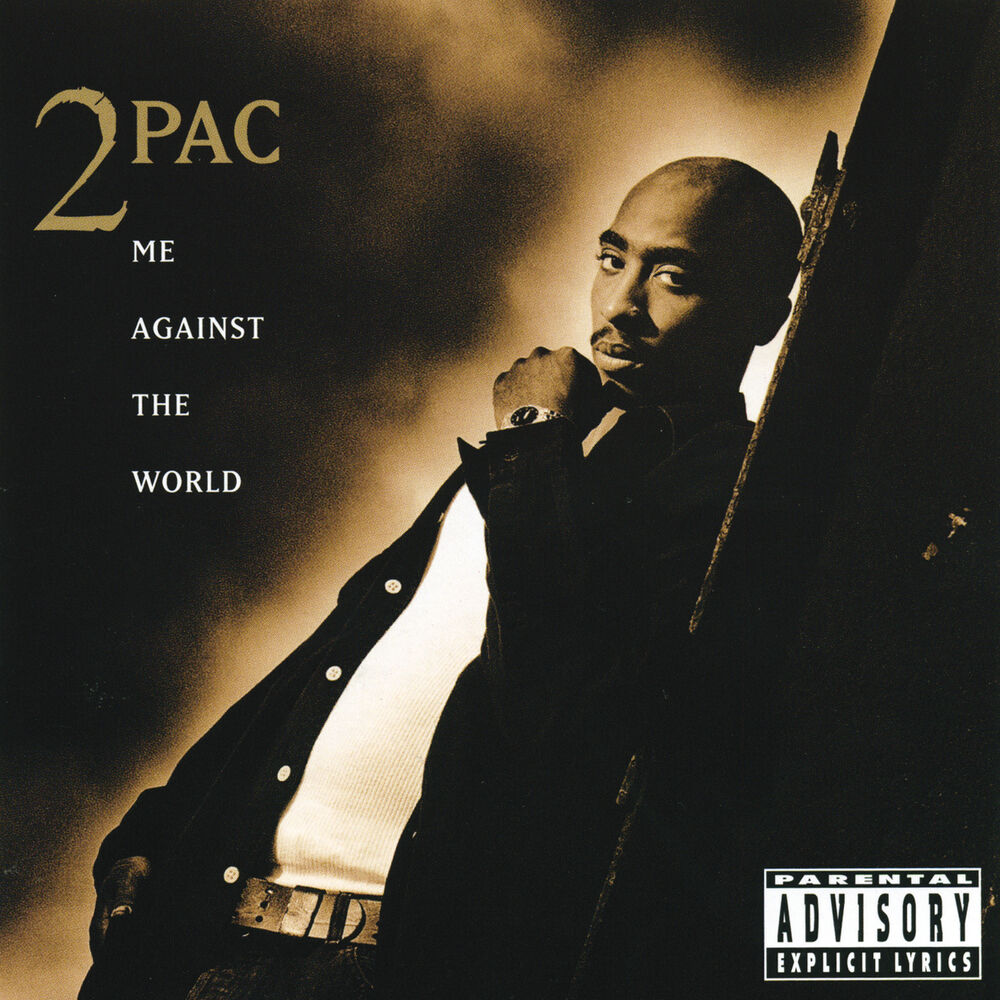
Hip-hop / West Coast & G-funk · 1995
Me Against the World
2Pac
Why listen
Fear and gratitude retain difficult memories in different forms, without allowing one perspective to cancel the other.
Listen and read
Tracks · previews
English editorial edition
Album story
Me Against the World does not divide neatly between outward attack and inward reflection. Anxiety in So Many Tears and gratitude in Dear Mama both leave difficult experience intact. Calling one track the hard Tupac and the other the gentle Tupac risks missing their shared pressure. The album can be approached as a sequence that keeps incompatible feelings within one person, rather than sorting them into separate, resolved identities.
Released on March 14, 1995, this was Tupac’s third studio album. The selection preserves the fifteen-track explicit programme from Intro through Outlaw. Clean versions, remixes and substitutes from hits collections are excluded. Dear Mama addresses his mother, Afeni Shakur, but a family tribute does not resolve the surrounding concerns with violence and poverty. Its place within the sequence makes gratitude another perspective, not the final answer to everything that precedes it.
Earlier music and present memory
The Library of Congress identifies the Spinners’ Sadie and Joe Sample’s In All My Wildest Dreams among the musical sources used in Dear Mama. Sampling brings material from an existing recording into a new work. Here, borrowed music supports an address shaped by family memory. Recognising the source is only a beginning; consider what emotional ground the reused material provides for the present words.
Gratitude without erasure
The tribute does not require its difficult memories to disappear. Appreciation can coexist with an account of hardship rather than converting the past into an ideal family portrait. Dear Mama follows Lord Knows and precedes It Ain’t Easy. That placement helps prevent a single affectionate song from making the whole album a story of reconciliation. Several perspectives remain active together.
An unresolved ending
Old School appears later, but the final two titles are Death Around the Corner and Outlaw. The gratitude encountered earlier does not automatically cancel their harder position. Instead of treating the record as a biography tasked with resolving contradictions, consider its arrangement of differing statements. Violent language and expressions about women remain open to criticism while self-doubt and affection retain their place within the same work.
The album through its tracks
Compare how So Many Tears and Dear Mama preserve difficult memories through anxiety and gratitude.
So Many Tears
This is the fourth track in the selected programme. Approach its anxiety without converting later events in the performer’s life into proof that the recording predicted them. Knowing the subsequent biography can close an earlier song around a single predetermined outcome. Consider the pressure within the present expression instead. Moving from this track to Dear Mama allows a comparison between memories that produce fear and memories retained inside gratitude. That difference does not make one performance authentic and the other artificial. The direction from which a person considers the past can change. Its early position also establishes expectations worth revisiting when the later, affectionate song arrives without erasing the original pressure.
Reference · Apple Music: selected explicit fifteen-track distributionDear Mama
The tribute to Afeni Shakur does not erase difficulty from a family portrait. Gratitude and painful memories remain together. The accompaniment uses material from the Spinners’ Sadie and Joe Sample’s In All My Wildest Dreams, musical sources identified by the Library of Congress. Move beyond recognising those titles to consider how earlier recordings support a present act of remembering. This is track nine, not the album’s concluding answer; It Ain’t Easy follows immediately. Keeping that placement in mind resists hearing appreciation as a solution to every surrounding problem. Loving someone need not demand a spotless account of either their past or one’s own. Comparing So Many Tears reveals another way of retaining difficulty.
Reference · Library of Congress: Dear Mama musical sources and family context
Listen next
Compare The Chronic’s producer-led cast with the way this album places one rapper’s conflicting perspectives within a sequence.
The Chronic ↗References & editorial note
Written for English readers. Album facts are referenced below; listening suggestions are editorial interpretations. AI-assisted editorial review; not independently human-reviewed.
- 2Pac official: explicit fifteen-track album and Dear Mama context · shop.2pac.com
- 2Pac official: March 14, 1995 release and original programme · shop.2pac.com
- Library of Congress: Dear Mama musical sources and family context · loc.gov
- Apple Music: selected explicit fifteen-track distribution · music.apple.com