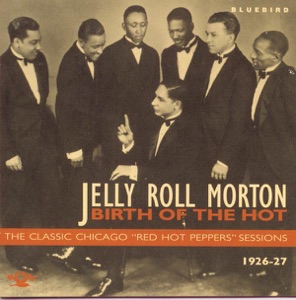
Jazz / Early jazz & New Orleans · 1926–30
Red Hot Peppers Sessions
Jelly Roll Morton
Why listen
A busy ensemble suddenly makes room for one voice, then gathers again. Shared timing can be as inviting as an impressive solo in these short recordings.
Listen and read
Tracks · previews
English editorial edition
Album story
In Black Bottom Stomp, follow a change in density rather than trying to identify every instrument. When a crowded space clears and then fills again, a short performance starts to feel like a sequence of scenes. Jelly Roll Morton’s Red Hot Peppers become approachable when you ask how the players move a piece together, rather than deciding who wins the solo contest. You can anticipate the next collective entrance much as you might wait for a familiar chorus.
This entry covers recording activity from 1926–30, not an LP released over those years. The linked Birth of the Hot is a twenty-three-track selection focused on the Chicago sessions of 1926–27. It includes alternate takes, so the count does not mean twenty-three different compositions or a complete account of the group’s activity. Begin with the two pieces below. Comparing versions can come later, once you have a performance you want to revisit.
Choose one route through the ensemble
Overlapping instruments need not be understood all at once. Choose a high line on one listen, then a lower part or the pulse on another. What changes when someone comes forward? Listen for the space other players leave. If a collective stop makes you anticipate the return, you are already following part of the arrangement without needing to label its form.
Structure can make room for personality
Composition and spontaneity need not be treated as enemies. The National Park Service’s history emphasises Morton’s work as a composer and bandleader. A useful listening question is smaller than that reputation: how does an individual statement remain part of a shared direction? Follow the handovers and the moments when the group rejoins. Order can support a distinctive voice rather than merely restrict it.
Make a short first visit
At a comfortable volume, give one recording your attention. Do not raise the level simply to fight the sound of an old transfer. Follow the beat first, then return to a detail that stayed with you. Place Dead Man Blues beside Black Bottom Stomp and let the actual changes challenge expectations suggested by their titles. Curiosity about the setting can follow enjoyment, rather than serving as a qualification you need before beginning.
The album through its tracks
Follow changing ensemble density in Black Bottom Stomp and the transition after the opening of Dead Man Blues. Alternate takes in the selection are separate performances of the same pieces.
Black Bottom Stomp
Wait for attention to shift from a crowded ensemble to a more exposed line. The featured player is only part of the event: notice what the others do with that space. The recording entered the US National Recording Registry in 2006, a later preservation decision rather than evidence of its original sales or unanimous reception. For your own listening, follow the pulse once, then return to places where the texture becomes thinner. Does the beat continue in your imagination while fewer sounds occupy it? Does the group’s return feel stronger because of the gap? A densely eventful recording need not have the same density throughout. Hearing that distinction brings the movement of the small band closer.
Reference · Library of Congress: Black Bottom Stomp, Burton Peretti retrospective essayDead Man Blues
Do not let the title settle the mood before the performance begins. The National Park Service identifies the opening quotation as Flee As a Bird, associated with New Orleans funeral processions. That gives a local setting to the reference without making this studio performance a documentary recording of a funeral. Remember the opening atmosphere as the rhythm changes around it. How do the same players acquire a different expression? The linked compilation includes two takes, not two unrelated compositions with the same title. Start with the earlier-listed version and return to the other later. Comparing the way a familiar passage arrives can move attention from interpreting a title towards discovering how an ensemble makes choices.
Reference · National Park Service: A New Orleans Jazz History, including Dead Man Blues
Listen next
Continue with Louis Armstrong’s Hot Fives & Sevens and compare how a shared ensemble makes room for a strongly individual voice.
Hot Fives & Sevens ↗References & editorial note
Written for English readers. Album facts are referenced below; listening suggestions are editorial interpretations. AI-assisted editorial review; not independently human-reviewed.