Jazz / Bebop · 1949–50
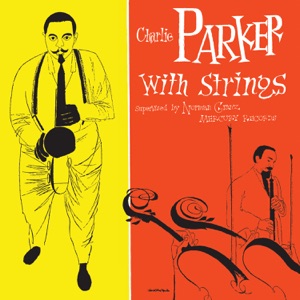
Charlie Parker with Strings
Charlie Parker
Why listen
Parker’s agile alto finds new turns inside the broad phrases of a written string setting.
Listen and read
Tracks · previews
English editorial edition
Album story
A sustained string backdrop does not stop Charlie Parker’s alto from turning a phrase early or finding an unexpected route into the next one. Charlie Parker with Strings is more interesting than the idea of a fiery soloist becoming polite. Singing a melody and bending away from it can happen within the same breath; the smooth surface does not remove rhythmic elasticity.
The central recordings come from two New York studio sessions, in November 1949 and July 1950, arranged by Jimmy Carroll and Joe Lipman respectively. Strings are only part of the setting: woodwinds, harp and a rhythm section also surround the alto. These are not documents of one continuous concert. Familiar songs become concise performances in which the balance between prepared surroundings and a moving solo line remains active.
Written parts leave decisions open
An arranged accompaniment does not mean that Parker has abandoned improvisation. Separate phrases that retain a recognisable melodic outline from those that fill the intervening space more densely. Against a held string note, a small turn from the alto can change your sense of time. Follow bass and drums as well: they reveal where the soloist leans on the pulse and where he seems to move ahead of it.
Listen before choosing a side
Jazz Lines’ edition of the original score documents Parker’s interest in recording with strings. That history need not become a sweeping verdict about every contemporary listener. Instead, ask whether the smooth arrangement blunts the solo’s edges or makes them easier to notice. There is more room for comparison once fast bebop stops being the only possible measure of his identity.
Sessions are not editions
The selected Complete Master Takes is a 1995 compilation of twenty-four tracks. Its first fourteen represent the two studio sessions discussed here; live performances and material from other dates follow. Begin with the first six, then move into the next eight and compare the space around the alto. A familiar title returning later as a live track is another performance, not simply a continuation of the original programme.
The album through its tracks
Alternate attention between the alto’s short phrases and the strings’ sustained notes during the first fourteen studio tracks.
Just Friends
If the smooth setting makes you expect only a leisurely melody, Parker’s entrance quickly complicates that expectation. Fast-moving notes need not erase the outline of the song. This performance comes from the 1949 session and opens the selected compilation. Rather than imagining bebop technique stripped away, listen for familiar melodic shapes sharing a phrase with agile invention. Follow the ends of the solo statements first, then the pulse supplied by bass and drums beneath them. A held string note can make an extra turn from the alto especially apparent. You do not need to count notes to hear the accompaniment and soloist using the same span of time in different ways.
Reference · Pristine Classical: dated studio session programme and personnelApril In Paris
Try listening from two distances: first follow the clear alto melody, then attend to the surrounding movement while it holds your attention. Jimmy Carroll arranged this 1949 studio performance. Jazz Lines’ publication from the original manuscript notes that some string passages were cut for the recording, a reminder that a score and a finished performance are not identical objects. There is no need to hunt for missing bars as you listen. Concentrate instead on the breathing room that actually remains. This is track three in the selected edition, distinct from the later live version. Small accents and phrase endings keep the soft texture from determining a single unchanging emotional response.
Reference · Jazz Lines Publications: April in Paris, original manuscript edition and session history
Listen next
Compare the Savoy and Dial studio recordings for a sense of what remains in Parker’s phrasing when the surroundings change, rather than deciding which setting is the authentic one.
The Complete Savoy & Dial Studio Recordings ↗References & editorial note
Written for English readers. Album facts are referenced below; listening suggestions are editorial interpretations. AI-assisted editorial review; not independently human-reviewed.