Jazz / Hard bop & Blue Note · 1956
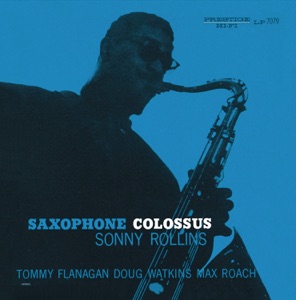
Saxophone Colossus
Sonny Rollins
Why listen
Small recurring phrases change length and direction, giving five performances distinct shapes within one quartet.
Listen and read
Tracks · previews
English editorial edition
Album story
The title Saxophone Colossus might suggest a monument to uninterrupted soloing. A more useful entrance is the way a small phrase returns. When Sonny Rollins extends a shape or changes its ending, the next scene shifts. Improvisation becomes something to follow through remembered gestures, rather than an unbroken succession of unfamiliar notes.
The artist’s official discography dates the session to June 22, 1956, at Van Gelder Studios in Hackensack, New Jersey. Rollins plays tenor saxophone with Tommy Flanagan on piano, Doug Watkins on bass and Max Roach on drums. The selected digital programme contains five tracks, from St. Thomas to Blue 7. Inconsistent remaster qualifiers in provider titles are recorded for identification, not turned into a single mastering date for the album. Recording year and later digital copyright remain distinct.
A shape worth remembering
The melody of St. Thomas offers a ready point of contact. Its calypso foundation belongs to this piece, not a description imposed on the entire album. Pick one small figure and wait for another encounter with it; remembering every note is unnecessary. A return with changed emphasis or duration makes repetition a means of reaching the next scene, rather than remaining in the same place.
Count all four players
One instrument dominates the title, but four musicians make the record. When the tenor pauses, notice whether piano, bass or drums holds your attention. Accompaniment need not remain an anonymous floor beneath the soloist. Alternate between drum accents and the continuing movement of the bass. Shifting attention on successive hearings can reveal shared time more clearly than trying to grasp every sound at once.
Five different spans
After You Don’t Know What Love Is and Strode Rode, Moritat and Blue 7 occupy longer stretches. Do not treat that length merely as an exhibition of technique. Hear how long an idea stays in memory and how another player’s appearance changes its return. The album remains approachable because familiar material and unpredictable detail coexist. A newcomer and an experienced listener can start with the same small act of recognition, then find different routes through an extended performance. A remembered fragment becomes a way of measuring musical time.
The album through its tracks
Remember a short tenor gesture and compare its length and ending when it returns.
St. Thomas
Choose a small shape from the opening melody and remember it. Following what changes around that memory can make improvisation less like a stretch in which every note is unfamiliar. This is the first track of the selected five-part programme, lasting approximately six minutes forty-six seconds. Hear the calypso foundation through the interaction of tenor and drums rather than as an exotic decoration. Concentrating on Max Roach’s attacks opens one route; following the ends of Rollins’s phrases opens another. Neither needs to be the correct answer. A familiar melody can sound different depending on what held your attention immediately before it. Beneath an inviting first impression, rhythmic choices and phrase lengths keep moving.
Reference · Apple Music: selected five-track digital issueBlue 7
The fifth and final performance lasts about eleven minutes seventeen seconds. Instead of trying to master that span immediately, follow one small tenor idea and notice what remains of it. A changed ending or an extended shape lets memory affect the present sound. During another player’s turn, attend to the changing density rather than simply waiting for the tenor to return. Bass and drums provide another measure of the solo’s duration. The provider’s remaster suffix identifies this file; it is not a new composition title. This selection closes the official five-track programme. You can approach its length through recognition and variation without first learning advanced harmonic terminology, then choose another fragment on a later hearing.
Reference · Apple Music: selected five-track digital issue
Listen next
Continue with Blue Train to compare a quartet with one horn against an ensemble featuring several.
Blue Train ↗References & editorial note
Written for English readers. Album facts are referenced below; listening suggestions are editorial interpretations. AI-assisted editorial review; not independently human-reviewed.