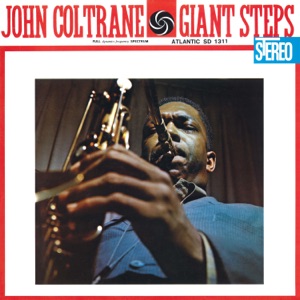
Jazz / Modal jazz · 1960
Giant Steps
John Coltrane
Why listen
Seven original compositions place rapid harmonic movement beside blues forms, compressed statements and a spacious ballad.
Listen and read
Tracks · previews
English editorial edition
Album story
The reputation of Giant Steps can make it sound like an examination before the record has even begun. The title performance is only one part of a seven-composition programme. Blues frameworks, a brief concentrated statement and a slow melody sit beside its rapid changes. All seven pieces are Coltrane originals, making the album a portrait of compositional choices as well as an encounter with a formidable tenor saxophonist.
Released in 1960, the album was largely recorded in May 1959 with Tommy Flanagan, Paul Chambers and Art Taylor. Naima comes from a different session with Wynton Kelly and Jimmy Cobb alongside Chambers. Coltrane also participated in Kind of Blue during 1959. These overlapping activities complicate a simple story in which harmonic density had to be exhausted before he discovered any other approach. Several possibilities were already available to him.
Continuity across quick changes
In the title piece, the harmony moves rapidly between three tonal centres. Remember the theme’s outline before attempting to name every chord. The saxophone can suggest a continuing line while its accompaniment repeatedly changes the ground beneath it. That relationship makes the performance more interesting than a demonstration of having survived a difficult progression. Complexity of preparation need not eliminate a listener’s sense of forward motion.
Unequal lengths, different designs
Countdown lasts roughly two and a half minutes here, while Syeeda’s Song Flute exceeds seven. One concentrates its material; the other allows it more room. Cousin Mary and the closing Mr. P.C. bring blues structures into the same sequence. These contrasts resist the idea of seven equally difficult studies. Theme, duration and placement each contribute to the shape of the album.
The ballad is not the ending
Naima occupies the penultimate position. Let Mr. P.C. follow it, and the ballad becomes part of a change of momentum rather than a final farewell. Its different pianist and drummer add another distinction within the programme. After hearing all seven pieces, return to the opening: the famous technical challenge now belongs to a wider set of choices made by the composer and bandleader.
The album through its tracks
Compare the title performance with Naima, then retain Mr. P.C. after the ballad to hear the original ending of the sequence.
Giant Steps
The opening track lasts about four minutes forty-eight seconds in this remaster. Flanagan, Chambers and Taylor accompany Coltrane on the original album take, distinct from the many alternatives preserved on expanded editions. Memorise the theme’s outline, then follow how the tenor develops a line across changing accompaniment. You do not need to identify every chord to hear that relationship. When the piano takes its turn, compare how a different instrument handles the same setting. Reducing the performance to a contest between successful and unsuccessful players misses their different responsibilities. Continue into Cousin Mary too, so the title track does not become your model for every piece on the record.
Reference · Qobuz / Rhino Atlantic — seven-track 2020 remaster and per-track personnelNaima
Named for Coltrane’s wife, this ballad lasts about four minutes twenty-five seconds in the selected delivery. Kelly and Cobb replace Flanagan and Taylor, while Chambers remains on bass. Compare the scale of the tenor’s phrases with the title track, rather than hearing only a reduction in speed. Sustained notes and their accompaniment establish another way to organise the quartet. The personnel change offers a further point of comparison without requiring a ranking of the players. A short preview cannot show the complete form or solo order. On the original album, Mr. P.C. follows: retain that next step instead of treating this melody as the programme’s final goodbye.
Reference · Rhino — Naima dedication and original album context
Listen next
Continue to My Favorite Things for soprano saxophone and more persistent musical foundations, comparing another approach rather than a supposedly complete reversal of everything heard here.
My Favorite Things ↗References & editorial note
Written for English readers. Album facts are referenced below; listening suggestions are editorial interpretations. AI-assisted editorial review; not independently human-reviewed.
- Rhino — original album and 2020 anniversary track lists · www.rhino.com
- Mosaic Records — recording chronology, seven compositions and ensemble changes · www.mosaicrecords.com
- Qobuz / Rhino Atlantic — seven-track 2020 remaster and per-track personnel · www.qobuz.com
- Apple Music — seven-track 2020 remaster · music.apple.com
- Rhino — Naima dedication and original album context · www.rhino.com
- Everything Jazz — three tonal centres and major-third structure · www.everythingjazz.com