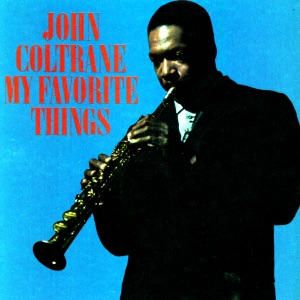
Jazz / Modal jazz · 1961
My Favorite Things
John Coltrane
Why listen
Four borrowed songs become an introduction to the scale and character of a new quartet.
Listen and read
Tracks · previews
English editorial edition
Album story
The title tune is a doorway, but it occupies almost fourteen minutes of the house. A melody from The Sound of Music remains recognisable while John Coltrane and his quartet give it a much larger frame. Recognition does not settle the performance; it makes the distance travelled more tangible. Soprano saxophone supplies the most immediately distinctive colour, yet the arrangement depends on four musicians rather than on the novelty of one instrument.
Recorded in October 1960 and released in March 1961, the album features McCoy Tyner on piano, Steve Davis on bass and Elvin Jones on drums. Davis matters here: this is not yet the later quartet with Jimmy Garrison. Coltrane plays both soprano and tenor. The current presentation follows the four original selections in the stereo portion of the 2022 reissue, without repeating them in mono.
An identity built from borrowed material
Rodgers and Hammerstein, Cole Porter and George Gershwin provide the repertoire. There is no Coltrane composition among the four selections. That absence does not make the record impersonal. Choosing familiar material gives an audience a point of reference, while arrangement and improvisation determine how far each performance can extend beyond its original setting. The retained song titles are useful clues, not promises of conventional treatments.
The proportions are uneven by design
Everytime We Say Goodbye follows the expansive opener in less than six minutes. Summertime then stretches beyond eleven, before But Not for Me closes the programme at roughly nine and a half. These proportions prevent the album from becoming four equally extended excursions. The shorter second piece changes the scale against which the third is heard; skipping it sacrifices part of the sequence’s character.
A quartet, not an instrument demonstration
Coltrane described soprano as another approach to improvisation. The change belongs within a working ensemble: Tyner, Davis and Jones help turn recognisable songs into sustained performances. Following all four selections makes that collaborative project clearer than treating the title track as an isolated breakthrough. The repertoire remains connected to popular song even as the quartet changes what such a song can contain.
The album through its tracks
Keep the short second selection between the two longer opening-side and closing-side statements; compare the change in scale as Summertime begins.
My Favorite Things
Familiarity becomes a resource rather than a restriction. The Rodgers and Hammerstein theme gives the soprano line a recognisable reference, while the quartet expands its setting to approximately thirteen minutes and forty-six seconds. The selected recording is the 2022 stereo remaster, not its mono companion or a shortened single edit. Compare the recurring tune with the changing ensemble around it: a familiar melodic outline can return while the surrounding texture gives it a different emphasis. The title names the borrowed song, but its duration belongs to this arrangement. Piano, bass and drums help make that difference audible; describing the transformation as a saxophone solo alone misses the collective construction.
Reference · Rhino — 2022 reissue, original four-track programme and October 1960 quartetSummertime
Placed third, Summertime reopens the album’s larger scale after the relatively compact Porter song. Its approximately eleven minutes and thirty-seven seconds make it substantial without duplicating the opener’s proportions. The Gershwin title provides another familiar reference, but the sequence gives this performance a different job: it begins the long final stretch that But Not for Me completes. Hear it after Everytime We Say Goodbye before treating it as a separate anthology selection. This is the stereo track from the same 2022 edition. The contrast with the shorter preceding song brings its scale into focus, while the final selection gives this extended performance a substantial partner rather than a brief afterthought.
Reference · Qobuz / Atlantic — 2022 mono and stereo programme, durations and personnel
Listen next
A Love Supreme replaces four borrowed songs with a four-part Coltrane work. Compare unity created by selecting a repertoire with unity built into the composition itself.
A Love Supreme ↗References & editorial note
Written for English readers. Album facts are referenced below; listening suggestions are editorial interpretations. AI-assisted editorial review; not independently human-reviewed.