Japanese Music / Electronic music & technopop · 1978
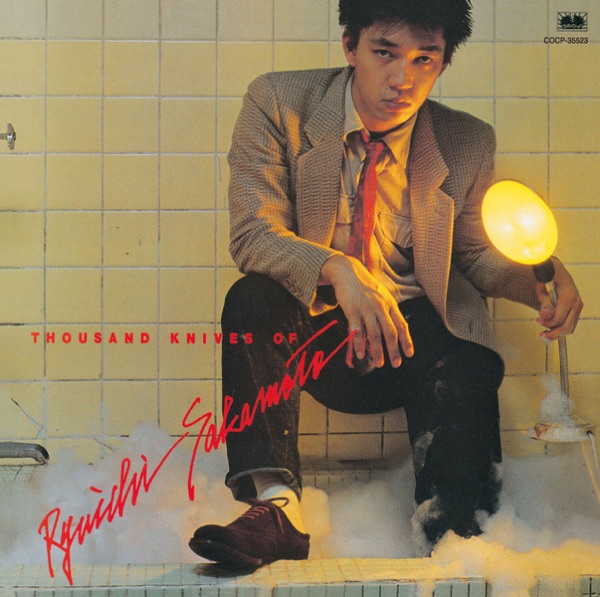
Thousand Knives
Ryuichi Sakamoto
千のナイフ · 坂本龍一
Why listen
Precisely repeated patterns leave room for lines that move at another speed, making order feel unsettled and alive.
Listen and read
Tracks · previews
English editorial edition
Album story
Small sounds interlock, then a longer melody or a guitar line seems to reach beyond their grid. Thousand Knives does not make electronic organisation the opposite of human playing. Its interest lies in hearing a repeated ground and a freer-moving foreground together, as though different speeds of thought could share one space.
Ryuichi Sakamoto’s first solo album appeared on Better Days in 1978; the FMPJ archive gives October 25 as its original release date. Sakamoto produced, composed, arranged and performed, with Hideki Matsutake assisting computer operation and synthesizer programming. That does not mean every instrument was played by Sakamoto alone. Guests, including guitarist Kazumi Watanabe and pianist Yuji Takahashi, establish different relationships from piece to piece.
Six rooms, not one continuous setting
After the extended title track, hear Island of Woods through distances and overlaps rather than treating its name as a compulsory landscape. Grasshoppers then places a piano partnership in the foreground. The opening three pieces already challenge the expectation of one electronic rhythm maintained throughout. The long German-titled fourth piece and Plastic Bamboo lead towards The End of Asia, changing the balance between patterns and longer lines again. Similar durations need not imply similar forms.
Listen across the supposed divide
An accurate repetition does not tell us that a piece assembled itself. Nor does an acoustic instrument automatically belong to an entirely different world. Select one regular layer as a reference and follow a line that stretches or breaks differently above it. Their relationship creates movement. The official credits include small percussion instruments and piano as well as electronic equipment; use that information to consider roles, rather than turning the record into a hunt for famous guests.
A debut with its own shape
Hearing this only as a preview of Sakamoto’s later career can reduce the differences among its six pieces. The linked Apple edition calls it an EP, while the label and original-release archive identify an album and confirm the same six-track sequence. A platform category does not rewrite the LP’s original format. Later piano interpretations and YMO performances should also remain distinct. Follow an accessible melody first, then return to the repeated ground beneath it: the same recording can open onto a different depth.
The album through its tracks
Keep one regular layer as your reference while following lines that move in longer or differently spaced phrases.
THOUSAND KNIVES
Let the long opening piece reveal its melody and the changing activity around it without trying to memorise the whole form. Choose one short recurring figure as a reference. When a longer line arrives, notice how foreground and ground seem to move at different speeds. Nippon Columbia credits Kazumi Watanabe’s guitar solo, Motoya Hamaguchi’s synth-drum contribution and Haruomi Hosono’s finger cymbals here. Those details discourage attributing every unfamiliar sound to one synthesizer. They need not become an instrument-identification quiz. Attend to sounds stepping forward and withdrawing, and hear this original approximately nine-minute-thirty-four-second performance as an extended entrance, distinct from later arrangements.
Reference · Nippon Columbia: six-track album and guest creditsGRASSHOPPERS
After the longer electronic spaces, two pianos change the sensation of sounds beginning and disappearing. Nippon Columbia explicitly identifies a duet between Yuji Takahashi and Sakamoto, so approach it as a relationship between performances rather than assuming one player overdubbed everything. Alternate your attention between interlocking short notes and passages that seem to scatter in different directions. The title need not dictate a literal portrait of insects. Durations and intervals between attacks provide enough to follow. As the third piece, its contrast with neighbouring timbres makes piano more than a decorative resting point: it becomes another way of organising attention within the album.
Reference · Nippon Columbia: six-track album and guest credits
Listen next
Compare YMO’s Solid State Survivor for the different uses of repetition in a solo album’s six-piece design and an electronic pop group.
Solid State Survivor ↗References & editorial note
Written for English readers. Album facts are referenced below; listening suggestions are editorial interpretations. AI-assisted editorial review; not independently human-reviewed.