Rock / Singer-songwriters & American rock · 1979
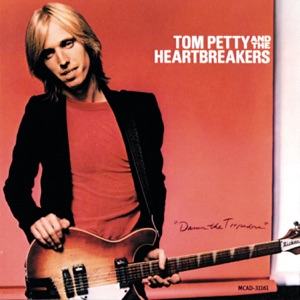
Damn the Torpedoes
Tom Petty and the Heartbreakers
Why listen
Nine sharply drawn songs turn painstaking studio choices into an immediate band sound.
Listen and read
Tracks · previews
English editorial edition
Album story
Damn the Torpedoes offers two different entrances in its first two tracks. Refugee establishes a firm recurring figure; Here Comes My Girl lets a conversational voice move towards a more openly melodic refrain. The instrumental family is recognisable, but the songs do not ask the singer to enter in the same manner. Clarity makes those differences easier to hear.
Tom Petty and the Heartbreakers released their third album in 1979. Jimmy Iovine and Petty produced it, with Shelly Yakus engineering. In a later interview, Mike Campbell recalled bringing Iovine and Yakus into the project after admiring the sound of Patti Smith’s Because the Night. Translating the band’s force in a room into a recording became a demanding part of the work.
An immediate result took time
Campbell remembered spending weeks on songs and days on a snare sound. Refugee proved particularly difficult: finding the desired sound and groove took enough work that he temporarily left the sessions. The recollection is useful without treating a remembered number of takes as an exact session log. An apparently straightforward song can require considerable experimentation with balance, attack and recorded perspective.
Two writers, different entrances
Petty and Campbell share the writing credits for both opening songs. Their different vocal approaches give the sequence variety before Even the Losers arrives. Campbell also recalled using his Broadcaster on Here Comes My Girl and Even the Losers. A common instrument does not prescribe a single expressive role: its relationship with the singing and surrounding parts changes from song to song.
A compact centre and a longer ending
The sixth song, Don’t Do Me Like That, is the shortest at approximately two minutes forty-two seconds. After two intervening tracks, Louisiana Rain supplies the longest span, nearly six minutes. The latter sequence therefore moves beyond compact efficiency towards a more extended conclusion. Following that route gives the famous opening songs a larger setting and makes the album’s proportions part of its appeal.
The album through its tracks
Compare the vocal entrances of the first two songs, then follow the route from the shortest sixth track to the longest finale.
Refugee
The opening song runs for approximately three minutes twenty seconds and establishes a firm recurring figure. Petty and Campbell share its writing credit. Campbell’s account of struggling to find the recording’s sound and groove gives its apparent ease another dimension: something that feels natural can result from repeated decisions. Follow the vocal entrance against the instrumental pattern, then notice how the accompaniment prepares the next phrase. The force comes from those relationships as well as the recognisable guitar part. This is the original album selection, distinct from the alternate take appended to the expanded edition. Here Comes My Girl then provides a different kind of vocal entrance within the same band sound.
Reference · Guitar World: Mike Campbell interviewed on the recordingHere Comes My Girl
At approximately four minutes twenty-three seconds, the second song allows more space than the opener. Conversational phrases lead towards a more melodic refrain, giving the voice somewhere to go instead of presenting every passage at the same expressive scale. Campbell recalled using his Broadcaster here, but the instrument’s name cannot explain its relationship with the keyboards and singing. Those parts contribute different outlines around the developing vocal. Hear it directly after Refugee to notice how two jointly written songs can establish force through different entrances. Continuing into Even the Losers extends the comparison into a three-song group, each retaining the band’s identity while changing the shape of its melodic invitation.
Reference · Guitar World: Mike Campbell interviewed on the recording
Listen next
Continue with the Byrds’ Mr. Tambourine Man to compare another period’s relationship between bright guitar outlines and vocal melody.
Mr. Tambourine Man ↗References & editorial note
Written for English readers. Album facts are referenced below; listening suggestions are editorial interpretations. AI-assisted editorial review; not independently human-reviewed.
- Tom Petty official store: original 1979 third album · store.tompetty.com
- Guitar World: Mike Campbell interviewed on the recording · www.guitarworld.com
- Qobuz / Geffen: original programme on first disc, credits and timings · www.qobuz.com
- UMe announcement: original album distinguished from nine bonus tracks · www.prnewswire.com
- Apple Music: selected nine-track Geffen delivery · music.apple.com