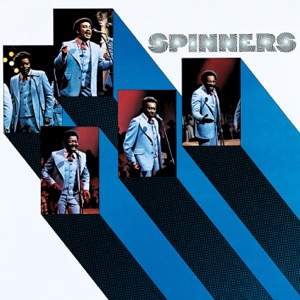
Soul / R&B / Philadelphia & sweet soul · 1973
Spinners
The Spinners
Why listen
A familiar set of hits becomes an album through placement: an extended declaration precedes a compact promise, and another signature song waits until the end.
Listen and read
Tracks · previews
English editorial edition
Album story
I’ll Be Around arrives fifth, not first. Immediately before it, I Could Never (Repay Your Love) lasts almost seven minutes. Rushing toward the familiar single would erase that contrast. Could It Be I’m Falling in Love then closes the ten-song programme. Spinners is both a source of recognizable songs and a decision about when the listener encounters them.
The Detroit group’s 1973 album was its first for Atlantic after earlier Motown work, not its recording debut. Thom Bell’s production and arrangements place the voices among strings, horns, guitars and rhythm instruments. Writing credits extend beyond Bell and Phil Hurtt to Bruce Hawes, Yvette Davis and others. A coherent studio sound does not establish identical authorship or an identical function for every instrumental part.
Allow the fourth song its time
The first three selections lead into the approximately 6:56 I Could Never. Hear the length as space for a declaration to develop, not simply a test of vocal ability. Follow phrase endings and the instrumental room after them. The roughly 3:09 I’ll Be Around becomes a particularly clear change of scale when it follows immediately, rather than appearing alone in a hits collection.
Leave room between the recognized titles
One of a Kind opens the second half, but We Belong Together deserves its own space before Ghetto Child. That eighth title also resists a description of all ten songs as romantic sweetness. Smoothly connected voices and arrangements need not imply identical subjects. Enjoy recognizing a refrain while allowing unfamiliar selections to remain individual songs, rather than treating them as connectors.
Two different questions close the record
How Could I Let You Get Away is followed by Could It Be I’m Falling in Love. Their titles suggest a movement from a lost relationship toward the possibility of another feeling, without proving one continuous character or story. Keep that sequence intact and compare it with encountering the final hit first elsewhere. Duration and neighbors can alter the apparent role of a song already known well.
The album through its tracks
Compare the fourth song’s extended span with the fifth, then hear the final two tracks together before returning to individual hits.
I Could Never (Repay Your Love)
Bruce Hawes wrote this fourth selection, which lasts approximately 6:56 here. Its duration is more than twice that of the following I’ll Be Around, providing a concrete starting point. More time need not mean constant intensity: attend to the room after a vocal phrase and the instrumental movement that occupies it. The large ensemble can distribute space rather than merely guarantee a luxurious surface. Follow how a recurring feeling is sustained instead of trying to summarize the performance prematurely. Then let the next song arrive without a pause. An extended declaration followed by a compact promise gives this particular programme a contrast that an isolated hit cannot supply.
Reference · Qobuz / Atlantic — licensed instrumental and writing creditsI'll Be Around
The approximately 3:09 fifth track was written by Bell and Phil Hurtt. Its initial position as a single’s B-side is a reminder that even a signature song did not begin with its later prominence guaranteed. Here, attend to the album placement rather than letting the success story replace the music. After the long fourth track, the concise form may feel especially concentrated. Follow rhythm and guitar before shifting attention to the vocal phrase, considering how a memorable line and its instrumental surroundings remain together. Familiarity need not make the accompaniment simple. Continue into One of a Kind to preserve the hit’s place within a larger sequence.
Reference · Rock Hall — Thom Bell and the original B-side hit
Listen next
Continue to the Stylistics’ debut to compare different vocal groups and song proportions within another Thom Bell production.
The Stylistics ↗References & editorial note
Written for English readers. Album facts are referenced below; listening suggestions are editorial interpretations. AI-assisted editorial review; not independently human-reviewed.
- Rhino — Spinners 1973, Atlantic debut and Thom Bell production · www.rhino.com
- Cherry Red — original ten-song programme and separate expanded bonus tracks · www.cherryred.co.uk
- Qobuz / Atlantic — licensed instrumental and writing credits · www.qobuz.com
- Rock Hall — Thom Bell and the original B-side hit · rockhall.com
- Apple Music — original ten-song distribution · music.apple.com