Soul / R&B / Singer-songwriter soul · 1971
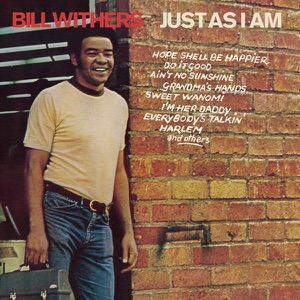
Just As I Am
Bill Withers
Why listen
Brief repetitions and family memories become distinctive songs within Booker T. Jones’s economical production.
Listen and read
Tracks · previews
English editorial edition
Album story
On Just As I Am, a short song does not mean an emotion quickly settled. Ain’t No Sunshine stays with an absence; Grandma’s Hands brings a remembered person close. Their consecutive positions reveal two different uses of economy, with neither song requiring a long explanation to establish its world.
Withers’s 1971 Sussex debut was produced by Booker T. Jones. Its collaborators included drummer Al Jackson and guitarist Stephen Stills. Legacy’s account specifically explains that Stills joined when Steve Cropper was unavailable, a useful distinction from calling the backing simply an intact familiar band. Different musical backgrounds meet around a singer whose phrasing remains the organising presence.
Production can mean leaving something alone
Withers later recalled intending to replace the repeated phrase in Ain’t No Sunshine with additional words. Jones encouraged him to retain it. That decision gives repetition a structural job: time can seem suspended even as the track moves forward. The producer’s contribution is not always another instrumental layer. Recognising what is already expressive, and allowing it to remain exposed, can shape the finished song just as decisively.
Other writers inside a personal record
Everybody’s Talkin’, written by Fred Neil, and the Lennon–McCartney song Let It Be sit among Withers’s own compositions. The album is therefore not a personal statement made only through original writing. Interpretation matters too. Placed fifth and eighth, the covers interrupt neither the programme nor its sense of a recognisable singer. They offer another way to hear what his voice brings to a melody before returning to his own material.
Closeness without a comfortable conclusion
Harlem opens the album before the familiar pair of short songs. Later, Hope She’ll Be Happier and I’m Her Daddy introduce further relationships, and Better Off Dead closes the sequence on an especially bleak note. The intimacy is not uniformly reassuring. A voice that feels near can also make an uncomfortable story harder to dismiss. Hearing the whole programme preserves that range: family affection, separation and troubling situations share the same carefully measured scale.
The album through its tracks
Play Ain’t No Sunshine and Grandma’s Hands consecutively to compare two different kinds of emotional economy.
Ain't No Sunshine
The second track takes approximately 2:06 to make absence tangible. In his later interview, Withers explained that he had considered adding different words where the short phrase repeats, until Jones encouraged him to keep it. Repetition does not merely fill an empty section: it allows the feeling to remain unresolved. Notice how much of this brief recording passes without a new verbal development. The preceding Harlem looks out towards everyday scenes; this song narrows attention to one missing person. The linked performance belongs to the original studio programme, not a later remix or concert version. Its compact form leaves the central feeling exposed rather than hurriedly explained away.
Reference · Rock Cellar — Bill Withers direct interview with Ken Sharp, archived 2015 interviewGrandma's Hands
At approximately 2:03, the third song makes a family memory vivid without enlarging it into an extended narrative. Withers later singled it out among the songs he remained proud of. That personal attachment offers a useful point of entry: hear the remembered person through the small scenes, rather than treating the recording only as a source for later samples or covers. After Ain’t No Sunshine, its similar duration carries a different emotional weight. One song lingers with an absence; the next gives remembered gestures a continuing presence. Listen to the pair together and consider how little extra explanation is needed for those separate experiences to remain distinct.
Reference · Rock Cellar — Bill Withers direct interview with Ken Sharp, archived 2015 interview
Listen next
Continue with the following year’s Still Bill to hear Withers’s concise songwriting with a changed production and instrumental team.
Still Bill ↗References & editorial note
Written for English readers. Album facts are referenced below; listening suggestions are editorial interpretations. AI-assisted editorial review; not independently human-reviewed.
- Bill Withers official — Just As I Am and direct selected Apple link · billwithers.com
- Legacy Recordings — original Sussex programme and production personnel · www.legacyrecordings.com
- Rock Cellar — Bill Withers direct interview with Ken Sharp, archived 2015 interview · rockcellarmagazine.com
- Columbia/Legacy via Qobuz — twelve tracks, durations and authorship · www.qobuz.com
- Library of Congress — Scott Bradlee on Ain’t No Sunshine, 2024 registry essay · www.loc.gov
- Apple Music US — Just As I Am original twelve-song programme · music.apple.com