Korean Music / 1980s · 1982
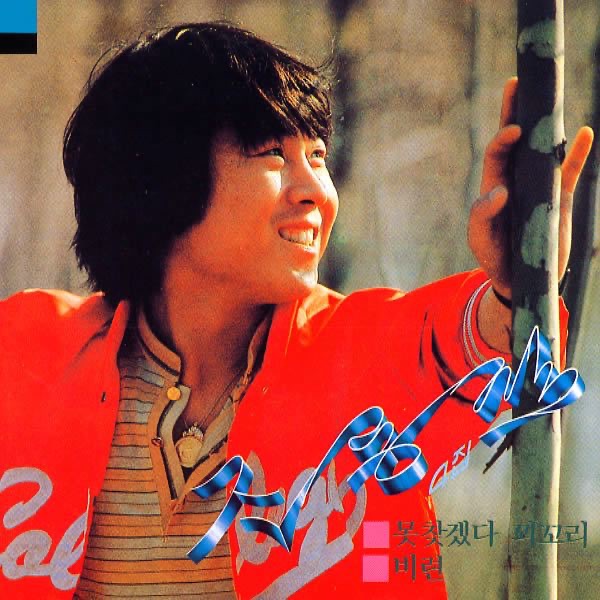
조용필 4집
조용필
Why listen
One voice changes its scale as it moves between clipped recurring calls and long melodic sentences.
Listen and read
Tracks · previews
English editorial edition
Album story
Compare the compact calls of 못찾겠다 꾀꼬리 with the sustained melodic reach of 비련, and the variety is audible before any genre labels are supplied. Cho Yong-pil’s fourth album makes different uses of a familiar voice. A repeated phrase pushes time forward; a held note asks us to remain inside a moment.
Released by Jigu Records in 1982, the album places songs such as 못찾겠다 꾀꼬리 and 생명 alongside 산장의 여인 and a closing folk-song medley. For listeners new to Korean popular music, these are different approaches to phrasing rather than interchangeable examples of one national style. The medley is specifically identified as a live performance from the 1981 Haeundae Beach Festival. It should not be imagined as sharing the studio setting of the preceding selections.
Listen to the length of the statement
Describing Cho only as a singer capable of high notes misses the changing manner of address. Separate passages where clipped words propel the pulse from those where a longer sound occupies the space across it. The accompaniment can press close or withdraw, changing the outline of the voice. Even in a similar register, a different entrance or release makes a phrase feel like a different character speaking. No catalogue of vocal techniques is needed to hear that use of time.
A sequence with more than one setting
The linked ten-track digital edition moves from the opening pair to 꽃바람 and 따오기, then later through 자존심, 산장의 여인 and 비련. Original vinyl side arrangements may differ; the digital sequence is the listening route described here. Notice the adjustment required when an ear accustomed to short repetitions encounters a longer sentence. The closing live medley remains one track rather than being artificially divided into separate song files. Its different performance setting is part of the album’s breadth.
Beyond the two familiar titles
Add the longer breath of 생명 to the opening comparison, and the contrast exceeds a simple opposition between fast and slow songs. This record need not stand in for Cho’s entire career: it is a particular gathering of approaches in 1982. Apple’s English track labels are service identifiers, not translations being asserted as official titles. Keep the Korean names alongside them, and distinguish reissue metadata from the original release. Choose one appealing song, then play its neighbours to discover what the voice changes between them.
The album through its tracks
Compare the short recurring calls with the longer melodic sentences, especially their entrances and endings.
못찾겠다 꾀꼬리
The recurring call makes the song seem to spring forward each time it returns. Listen for the exchange between quickly delivered words and sounds that remain in the air. With lyrics by Kim Soon-gon and music by Cho, the song brings childhood play into an adult speaker’s perspective. Reading its title only as a literal search for a bird misses that layering of time. Rather than quoting the lyric, compare the weight of a returning phrase after the intervening passage. This is the digital edition’s opener. Apple labels it Do not find oriole; retaining the Korean title gives a more reliable point of reference.
Reference · maniadb: original LP titles and songwriting credits비련
Attend to the way a long melodic line occupies space from its entrance. Holding a sound is only part of the effect: its release and the passage into the next sentence direct the emotional movement. Do not lose the quieter breathing while waiting for a climax. Written and composed by Cho, this song is ninth in the linked sequence, before the live medley changes the setting. Compare it with 못찾겠다 꾀꼬리 without turning the exercise into a contest of difficulty. Apple’s Tragic love label is a search aid. Even without understanding Korean, the sustained sounds and intervening rests offer a path through the performance.
Reference · Bugs: Jigu Records fourth album programme
Listen next
Compare Cho’s first album for another way of connecting different kinds of songs through one recognisable voice.
조용필 1집 ↗References & editorial note
Written for English readers. Album facts are referenced below; listening suggestions are editorial interpretations. AI-assisted editorial review; not independently human-reviewed.