Korean Music / 1980s · 1985
들국화
들국화
Why listen
An outward-driving voice and a more intimate song occupy different distances within one band’s debut.
Listen and read
Tracks · previews
English editorial edition
Album story
행진 moves outward with force, while 매일 그대와 later seems to address the listener from much closer by. Deulgukhwa’s debut offers more faces than the memory of a single powerful cry suggests. Notice where each new song begins after the previous one ends: the apparent height and distance of the voice can change.
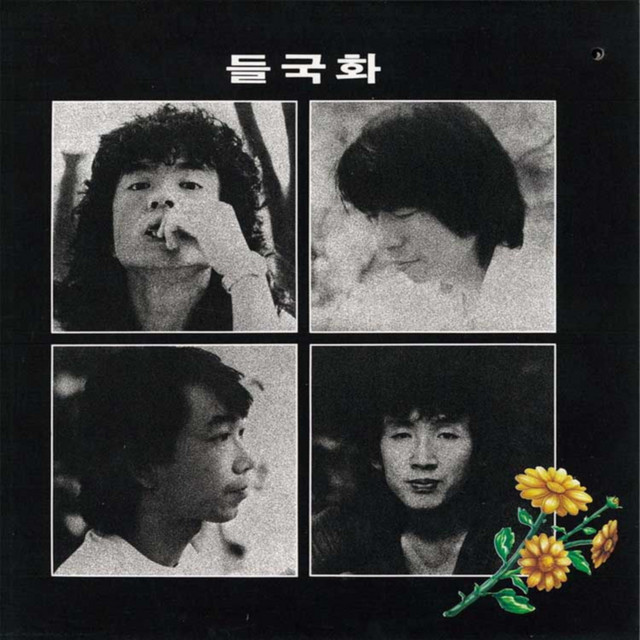
Released in September 1985, the debut brings together the first-period lineup of Jeon In-kwon, Choi Sung-won, Cho Deok-hwan and Heo Sung-wook. Later membership should not be projected unchanged onto this recording. The linked Beyond Music/Kakao issue contains nine songs, omitting 우리의 소원, the tenth selection on the original LP. Its ending therefore differs from that of the complete 1985 record. It is also distinct from the group’s 2013 self-titled album and later live recordings.
More than one direction
세계로 가는 기차, 더이상 내게 and 축복합니다 keep the sequence from repeating the opening momentum. 사랑일뿐이야 and 매일 그대와 change how the voice occupies its space. Loud and quiet need not translate simply into strong and weak. Compare phrase endings and the positions where accompaniment leaves room. Giving each song attention, rather than treating it as material surrounding a famous track, makes the album’s variety easier to hear.
Hear what supports a strong voice
행진 and 그것만이 내 세상 may leave the singing foremost in memory. On another pass, choose the instruments supporting each phrase. The time spent preparing a forceful entrance matters as much as the entrance itself. Because the band does not maintain one unvarying intensity, changes in the voice register more clearly. Follow the route from the opening statement rather than waiting only for a familiar refrain.
Listen beyond later recognition
오후만 있던 일요일 and 아침이 밝아올 때 까지 shape the closing stretch of this nine-song issue. Keep the missing LP closer in mind without reducing everything present to the same emotional declaration. Later rankings and awards may introduce the record, but cannot do the listening. Choose a vocal line in one song and rhythm or keyboards in another. The band’s force emerges partly from placing different kinds of expression alongside one another, rather than from the size of one individual voice alone.
The album through its tracks
Compare 행진 with 매일 그대와, noticing the voice’s distance from the accompaniment as well as its intensity.
행진
Rather than waiting only for the vocal to push forward, hear the phrases and instrumental movement preparing that moment. When a line stretches out, notice what place the band maintains beneath it. The song opens the 1985 debut and retains that position on this nine-track issue. Its title, meaning a march, need not establish a specific political slogan or historical event as the song’s documented subject. A listener may hear resolve or endurance, but that interpretation should remain distinct from verified production facts. Follow the singing once, then the rhythm behind it. When a familiar passage returns, compare the pressure before and after it.
Reference · Bugs: original album date and current programme매일 그대와
Compare how close the voice appears with songs that project more forcefully outward. A smaller delivery does not make the accompaniment disappear. Choose the instrumental sounds remaining after a phrase, and hear the movement continuing while the singer rests. This is track seven on both the LP and the linked issue, between 사랑일뿐이야 and 오후만 있던 일요일. If you know it through a later remake or television placement, set that memory aside briefly and attend to this recording’s spaces. Following where a vocal sentence is held and released can be more revealing than summarising its words. The softer song is another essential face of the band.
Reference · Bugs: original album date and current programme
Listen next
Compare the second album by Songgolmae with the changing relationship between a prominent singer and an ensemble sharing the foreground.
송골매 2집 ↗References & editorial note
Written for English readers. Album facts are referenced below; listening suggestions are editorial interpretations. AI-assisted editorial review; not independently human-reviewed.
- Bugs: original album date and current programme · music.bugs.co.kr
- Korean Music Awards:2021 lifetime achievement citation and first lineup · koreanmusicawards.com
- Korea Copyright Commission collection:1985LP ten-song listing · gongu.copyright.or.kr
- Donga2015: original ten-song sequence in tribute project · www.donga.com
- Apple Music: Beyond Music/Kakao nine-track issue · music.apple.com